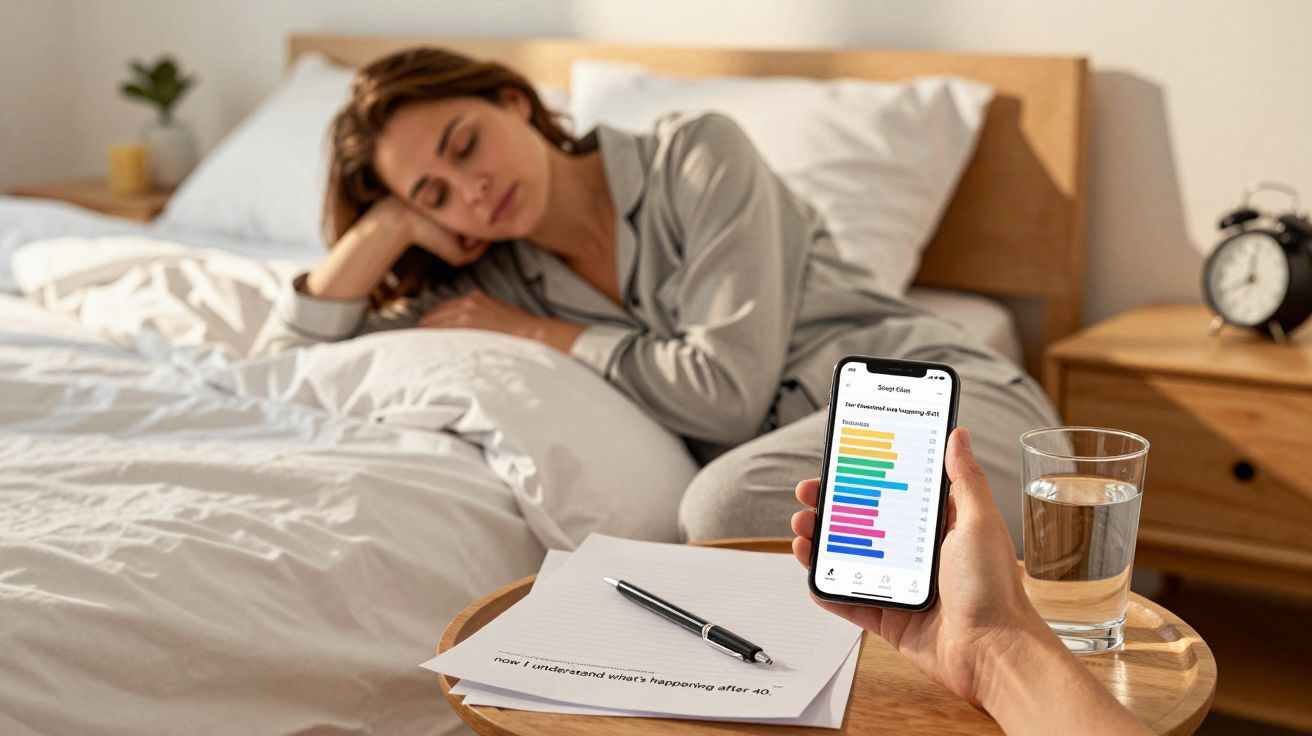
It’s easy to assume sleep science is one-size-fits-all, until you hit your forties and the rules start feeling oddly personal. In clinics and sleep-lab write-ups, it appears there is no text provided for translation. please provide the text you would like translated into united kingdom english. shows up as a kind of placeholder message - the moment where a “standard” protocol can’t quite capture what’s going on, so context is demanded. And when a tired patient says, of course! please provide the text you would like me to translate., it captures the awkward truth: after 40, researchers often need more detail, more diaries, more personalised baselines, because the old shortcuts stop working.
That matters for you because the stakes are everyday: driving safely, managing mood, blood pressure, weight, and the blurry line between “normal ageing” and a fixable sleep problem. The new message from researchers isn’t “you’re doomed to sleep badly”. It’s that the way we measure sleep - and what counts as a meaningful change - needs to shift with age.
The hidden switch: why the same study design stops fitting after 40
A lot of sleep research is built around averages: how long people sleep, how quickly they fall asleep, how often they wake, and what they report the next morning. Under 40, those averages can track pretty neatly with what’s happening in the brain and body. After 40, the same numbers can mislead, because sleep becomes more fragmented for many people even when they’re healthy.
Researchers are increasingly clear on the core issue: ageing changes your “sleep architecture” - the pattern of light sleep, deep sleep, and REM across the night. Deep sleep tends to shrink and become more vulnerable to disruption, which means two people can both get seven hours, but experience it very differently. Same duration. Different quality. Different biology.
What actually changes in midlife sleep (and why it confuses the data)
After 40, sleep doesn’t just get “worse”. It gets more variable, more sensitive to timing, and more influenced by factors that studies sometimes treat as background noise.
Three changes come up again and again:
- More awakenings, even if you don’t fully remember them. Micro-awakenings fragment sleep and can reduce how restorative it feels without dramatically changing total time asleep.
- A stronger circadian nudge towards earlier sleep and earlier waking. Many people drift earlier over time, then fight it with late nights, bright screens, and social schedules.
- Hormonal and health-related interference. Perimenopause/menopause, prostate symptoms, pain, reflux, medications, alcohol tolerance, and stress physiology all start to matter more - and they don’t affect everyone equally.
The research headache is this: if a 28-year-old and a 48-year-old both wake twice at night, it may not mean the same thing. In midlife, “waking twice” can be a stable baseline for one person, and a red flag for another.
The menopause factor researchers can’t treat as a footnote
In women, fluctuating oestrogen and progesterone can affect temperature regulation, mood, and arousal thresholds - the internal “tripwire” that wakes you. Hot flushes are the obvious culprit, but they’re not the only one. Even without dramatic symptoms, hormonal changes can shift sleep continuity and how the brain transitions between stages.
That forces researchers to choose: exclude people in perimenopause to keep the sample “clean”, or include them and accept messy reality. The field is slowly moving towards the second option, because clean samples can produce clean conclusions that don’t apply to real lives.
The measurement problem: why your tracker and a sleep lab can disagree more after 40
Wearables estimate sleep using movement, heart rate, and sometimes skin temperature. They can be useful for patterns, but they struggle with the subtler kind of fragmentation that becomes more common in midlife. A still body can be awake; a restless body can be asleep. After 40, that gap can widen.
Even lab measures (like polysomnography) have their own midlife bias. One night in a lab can exaggerate wakefulness for someone already prone to lighter sleep, and a “first-night effect” can hit harder when your system is less flexible. When researchers compare interventions - melatonin timing, CBT-I, light therapy, exercise - they can end up measuring who adapts to the lab, not just who sleeps better.
Why “sleep efficiency” can become a trap
Sleep efficiency (time asleep divided by time in bed) is a standard metric. But after 40, pushing it too hard can backfire. People respond by restricting time in bed aggressively, which can help in CBT-I when guided properly, but can also increase daytime fatigue if done bluntly.
Researchers are adjusting by combining metrics rather than worshipping one number. A small improvement in fragmentation, or in how quickly you fall back asleep, might matter more than a headline jump in total minutes.
So what do researchers do differently now?
The shift is less about discovering a magic pill and more about upgrading the research toolkit. In practical terms, “works differently after 40” often means studies are changing how they define success and how they separate signal from noise.
Common upgrades include:
- Longer baseline tracking. Two nights of data can be useless if your sleep varies across the week. Midlife sleep often demands weeks, not days.
- Stratifying by life stage and symptoms. Not just age brackets, but perimenopause status, medication classes, pain, alcohol use, and mental health load.
- Using outcomes people actually feel. Next-day functioning, sleepiness, mood stability, and “time to fall back asleep” are gaining weight alongside stage percentages.
- Testing timing, not only dosage. Light exposure, meal timing, exercise timing, and melatonin timing can be decisive when circadian rhythm shifts earlier.
None of this is as satisfying as a single dramatic result. It’s more like learning that the map needs a different scale once the terrain changes.
What this means for your own sleep (without turning it into a full-time job)
If you’re over 40 and sleep feels “off”, the most helpful mindset is: measure patterns, not perfection. One bad night doesn’t mean decline. One “good” tracker score doesn’t mean the issue is solved.
A simple, research-aligned way to sanity-check your sleep:
- Keep a two-week sleep window in mind, not a single night.
- Track wake-after-sleep-onset (how long you’re awake during the night) if you can, because it often matters more than total time.
- Notice timing drift: are you getting sleepy earlier, then forcing yourself later?
- If you snore, wake unrefreshed, or feel sleepy in the day, treat sleep apnoea as a possibility worth checking rather than a personal failing.
And if you’re trying an intervention - magnesium, melatonin, cutting caffeine, evening exercise - change one thing at a time. Midlife sleep is sensitive; piling on tweaks can create a fog where you can’t tell what helped.
When “normal for age” isn’t a comfort - it’s a clue
There’s a line researchers are careful about now: sleep changes with age, but suffering isn’t mandatory. Waking more often can be common and still worth addressing if it’s dragging your days down. Likewise, “I get six hours and I’m fine” can be true - until it isn’t, after stress, illness, or schedule changes.
The real takeaway is oddly reassuring: if sleep research seems contradictory after 40, it’s often because your body has become more individual, not more broken. The science is catching up to that reality, one messy dataset at a time.
FAQ:
- What’s the main reason sleep studies get ‘messier’ after 40? Sleep becomes more fragmented and more influenced by hormones, health conditions, and circadian timing, so averages hide bigger differences between people.
- Does less deep sleep automatically mean I’m sleeping badly? Not necessarily. Deep sleep tends to decline with age, but what matters is how you function in the day and whether fragmentation, snoring, or insomnia symptoms are present.
- Are sleep trackers reliable in midlife? They’re useful for spotting patterns, but they can miss quiet wakefulness and subtle fragmentation, which can become more common after 40.
- What’s one thing I can do that aligns with current research? Keep a consistent wake time and prioritise morning daylight; timing cues can stabilise sleep when circadian rhythms shift earlier.
- When should I seek medical help? If you have persistent insomnia, loud snoring, witnessed pauses in breathing, significant daytime sleepiness, or sleep disruption tied to pain, mood, or hot flushes, speak to a GP.





Comments (0)
No comments yet. Be the first to comment!
Leave a Comment