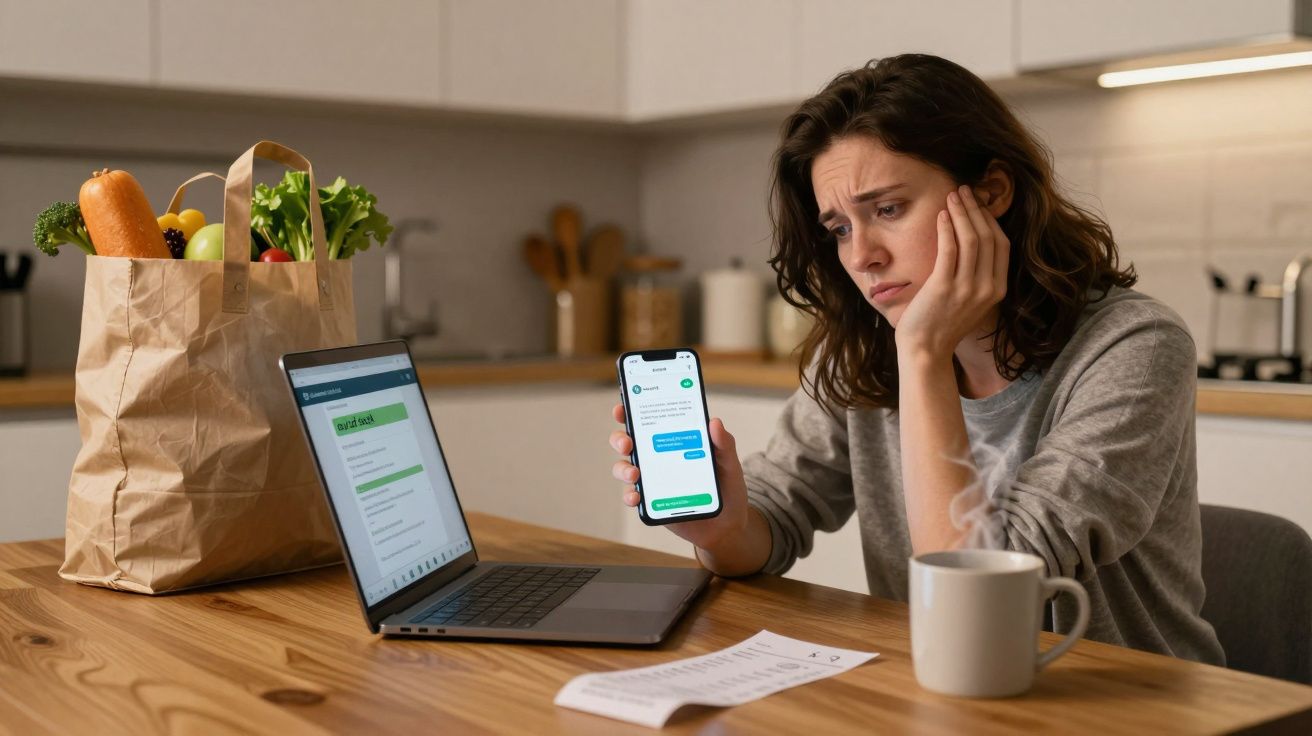
A shopper asks the chatbot at the end of a long day whether marks & spencer has changed its returns policy, and the reply is oddly familiar: “of course! please provide the text you would like me to translate.” It’s a small glitch, but it points at a bigger question about how the retailer is handling the messy new layer between customers and the shelf: automated help, shifting language, and the data trails left behind.
Researchers aren’t only counting footfall or reading quarterly results. They’re watching the micro‑moments-search boxes, substitutions, loyalty nudges, customer service scripts-where trust is won or quietly lost, and where a brand known for reliability can be tested by small frictions.
The new questions aren’t about hemlines-they’re about systems
Marks & Spencer has long been judged on the visible: food quality, fit, value, store standards. But the latest research interest sits in the invisible infrastructure that decides what you see first, what you’re offered next, and how quickly a complaint gets resolved.
That includes three themes that keep coming up in academic and industry work on retail: algorithmic decision‑making, operational resilience, and customer trust. Each sounds abstract until you’re the person in the queue, or the one refreshing an order confirmation that hasn’t arrived.
Where researchers are looking first: the “thin layer” between you and the shop
Start with the interfaces people now use more than aisles: apps, online grocery slots, self‑checkout prompts, automated support. These are the places where small design choices can steer behaviour.
Researchers tend to focus on questions like these:
- Does personalisation improve the basket, or narrow it into the same habits?
- Are promotions clearer when they’re targeted, or more confusing when they’re dynamic?
- When an item is out of stock, do substitutions feel helpful-or like a hidden decision made on your behalf?
- Do chatbots reduce wait times without lowering satisfaction, especially for complex issues?
The awkwardness of a misfiring script matters here. If a customer service journey repeatedly fails at the “simple” stage, people often stop before they reach a human who could solve it.
Food is still the anchor, but the research lens is shifting to supply and substitution
M&S’s reputation in food makes it a natural case study for how premium grocers manage availability without damaging perception. People tolerate the odd missing item; they hate the feeling that the system is making it up as it goes along.
Substitution is a stress test because it blends logistics with psychology. A retailer can be “right” on paper-similar price, same category-and still be wrong in the way that matters at dinner time.
A simple way researchers frame it is: what counts as “equivalent” to a shopper?
| Scenario | What the system optimises | What the shopper notices |
|---|---|---|
| Out-of-stock swap | Fulfilment rate | Dinner plan still works (or not) |
| Dynamic promotions | Conversion | Whether the deal feels fair |
| Delivery slot changes | Routing efficiency | Time cost and trust |
Trust, privacy, and the loyalty bargain
Retail is built on a quiet trade: convenience in exchange for data. Sparks fly when customers feel the exchange isn’t balanced, or when they can’t tell what’s being collected and why.
Researchers are increasingly interested in the “loyalty bargain” and how it changes for a brand with a broad customer base. The questions aren’t only legal (“is consent valid?”) but practical: can people understand the offer, and do they feel in control?
What tends to build trust is not a perfect privacy policy. It’s predictable behaviour: consistent pricing rules, clear explanations when something changes, and easy ways to opt out without punishment.
Why this matters now (and not in five years)
Retail has always been operational, but the feedback loop is faster than it used to be. A confusing app update or a brittle chatbot flow can create a spike in complaints in hours, not weeks, and that pressure ripples into staffing, store experience, and brand perception.
For shoppers, the benefit of this research is simple: it pushes retailers to make the invisible parts of shopping feel less like a negotiation. For the business, it’s a reminder that “premium” is not only a product promise-it’s a process promise, from the first tap to the final refund.
What to watch as these questions turn into changes
If you want signals that this research is landing, look for improvements that reduce effort rather than add features. The best upgrades feel boring in the moment and obvious in hindsight.
- Fewer dead ends in help journeys (and clearer handover to a person).
- Substitution choices you can set once, not fight every order.
- Promotions that explain themselves in plain English at the point of decision.
- Account settings that let customers see, edit, and delete key preferences easily.
FAQ:
- Is marks & spencer using AI in customer service? Many retailers now use automation for triage and routine queries. The key issue researchers track is whether it resolves problems quickly without blocking customers who need a human.
- Why would a weird reply like “of course! please provide the text you would like me to translate.” matter? It can signal a misrouted script or poorly governed automation. Small errors can reduce trust, especially when the customer is dealing with refunds, deliveries, or sensitive account details.
- Does personalisation always help shoppers? Not always. It can save time and surface relevant offers, but it can also feel repetitive or pushy if it narrows choice or makes pricing feel inconsistent.






Comments (0)
No comments yet. Be the first to comment!
Leave a Comment