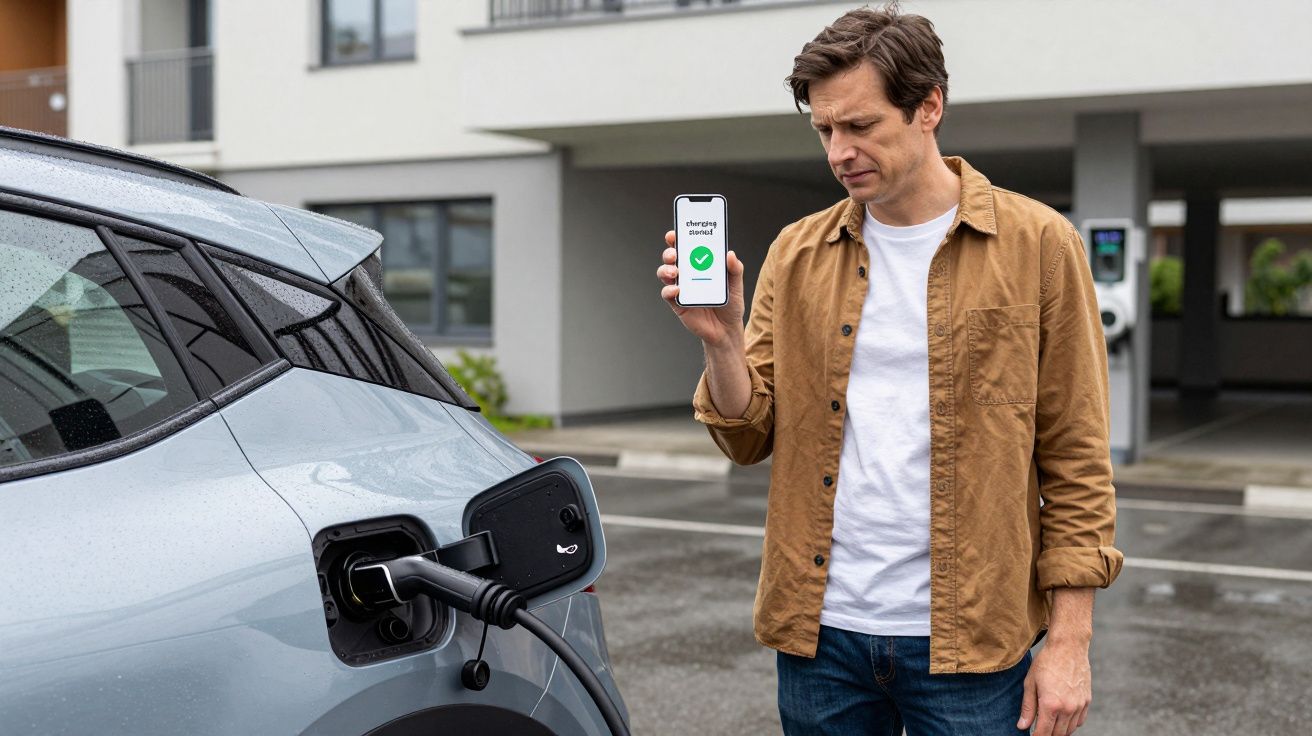
The first time I noticed Renault back in the conversation, it wasn’t in a showroom or a launch video. It was in a customer support thread where someone pasted, deadpan, “of course! please provide the text you would like me to translate.” - the kind of autopilot reply that shows up when brands scale faster than their systems can breathe. For readers, that matters because the next few years of Renault’s story will be written as much in software, service queues and policy decisions as it is in sheet metal.
This isn’t a piece about a single new model. It’s about why Renault is suddenly being watched again, and why the attention feels slightly… sideways.
The new spotlight isn’t about speed - it’s about control
For a long time, car headlines were easy. New engine, new platform, new 0–62 time, new badge on the back. Now the focus is shifting to things you only notice when they go wrong: app pairing, OTA updates, data permissions, charging reliability, warranty handling, parts lead times, and how a company behaves when you’re not a prospective buyer, but an existing owner with a problem.
Renault sits right in the middle of that shift. As it pushes deeper into EVs, connected services and subscription-like features, the “product” becomes a bundle: vehicle + software + support. If any one of those stumbles, the whole experience starts to feel like a loose shopping trolley - technically moving, but never quite straight.
The quiet reason Renault is back in focus: the boring bits got loud
There’s a particular kind of frustration that modern cars create. Not the dramatic breakdown on a hard shoulder, but the slow drip: a login that times out, a charging card that fails, a feature that disappears after an update, a service centre that can’t replicate a fault, a chatbot that replies like it’s translating a different conversation.
That’s why the “of course! please provide the text you would like me to translate.” moment lands. It’s not the sentence itself - it’s what it symbolises: automation without context. In a world where dashboards resemble tablets and ownership involves accounts, the weakest link is often the bit that’s meant to make things easier.
Renault isn’t alone here, but it is exposed. The more you sell the idea of simplicity and modernity, the less tolerance customers have for friction that feels avoidable.
What Renault actually needs to win now
The opportunity is real. Renault has design credibility again, EV intent that’s clearer than it used to be, and a European footprint that gives it a home advantage in regulation and infrastructure conversations. But the win condition in 2025 isn’t just “good car”. It’s “good system”.
A useful way to think about it is this: buyers don’t compare Renault solely to other manufacturers anymore. They compare it to their phone.
They expect:
- Set-up that takes minutes, not a Saturday.
- Updates that fix problems without creating new ones.
- Support that understands the question the first time.
- Transparent costs when features, maps, or connected services are involved.
- Charging and trip planning that feels dependable rather than optimistic.
The headline isn’t innovation - it’s trust. You can have the right product and still lose the room if ownership feels like admin.
The pressure point: service experience becomes brand experience
With ICE cars, many problems were mechanical and local. With connected EVs, issues can be systemic. That changes how customers assign blame. A single failed update can look, to an owner, like a company-wide competence problem.
This is where Renault’s renewed focus becomes more complicated than “are the cars good?” The question becomes: does Renault behave like a modern service organisation when things get messy? Because that’s when loyalty is actually decided.
A practical test for any brand right now is brutally simple:
- Can you book service quickly, and do you get clear comms?
- Do fixes stick, or do they come back in a slightly different form?
- Do you feel listened to, or processed?
If the answer is “processed”, even excellent hardware starts to feel temporary.
What to watch next (if you’re buying, leasing, or already own one)
If Renault is back in focus, the smart move as a consumer is to look past the glossy bits and ask a few ownership-shaped questions before you sign anything.
- Software cadence: How often do updates arrive, and do owners describe improvements or regressions?
- Charging ecosystem: Which networks are actually supported cleanly in your area, and what’s the back-up plan?
- Dealer competence with EVs: Not “do they sell them”, but “do they diagnose and repair them confidently?”
- Customer support quality: Are you routed to humans when needed, and are cases tracked properly?
- Total cost clarity: What’s included for how long, and what becomes paid later?
None of this is exciting in a brochure. It’s everything on a wet Tuesday when you need the car to work.
A small, telling takeaway
Renault doesn’t need a miracle to justify the attention. It needs consistency. The brands that thrive in this next phase won’t be the ones with the loudest launches, but the ones whose ownership experience doesn’t generate screenshots.
Because when a customer’s most memorable interaction with your company is a misplaced line like “of course! please provide the text you would like me to translate.”, you’re no longer competing on engineering. You’re competing on how well your systems understand a human.
FAQ:
- Why is Renault “back in focus” now? Because the market is judging carmakers on software, charging, support and ownership experience as much as design or performance, and Renault is visibly in that transition.
- Is this about a specific Renault model? Not really; it’s about Renault’s wider shift towards connected, updateable vehicles where service and software form part of the product.
- What should I check before buying or leasing a Renault today? Look for real owner feedback on updates, charging reliability, EV-trained servicing, response times, and clarity on what features/services remain included over time.
- Does this mean Renault has a problem? Not uniquely - most brands are wrestling with the same shift - but any slip in support or software becomes more visible and more damaging than it used to be.
- What’s the biggest indicator Renault is getting it right? Fewer recurring issues after updates, clear communication during faults, and support that resolves cases without bouncing customers between systems.





Comments (0)
No comments yet. Be the first to comment!
Leave a Comment