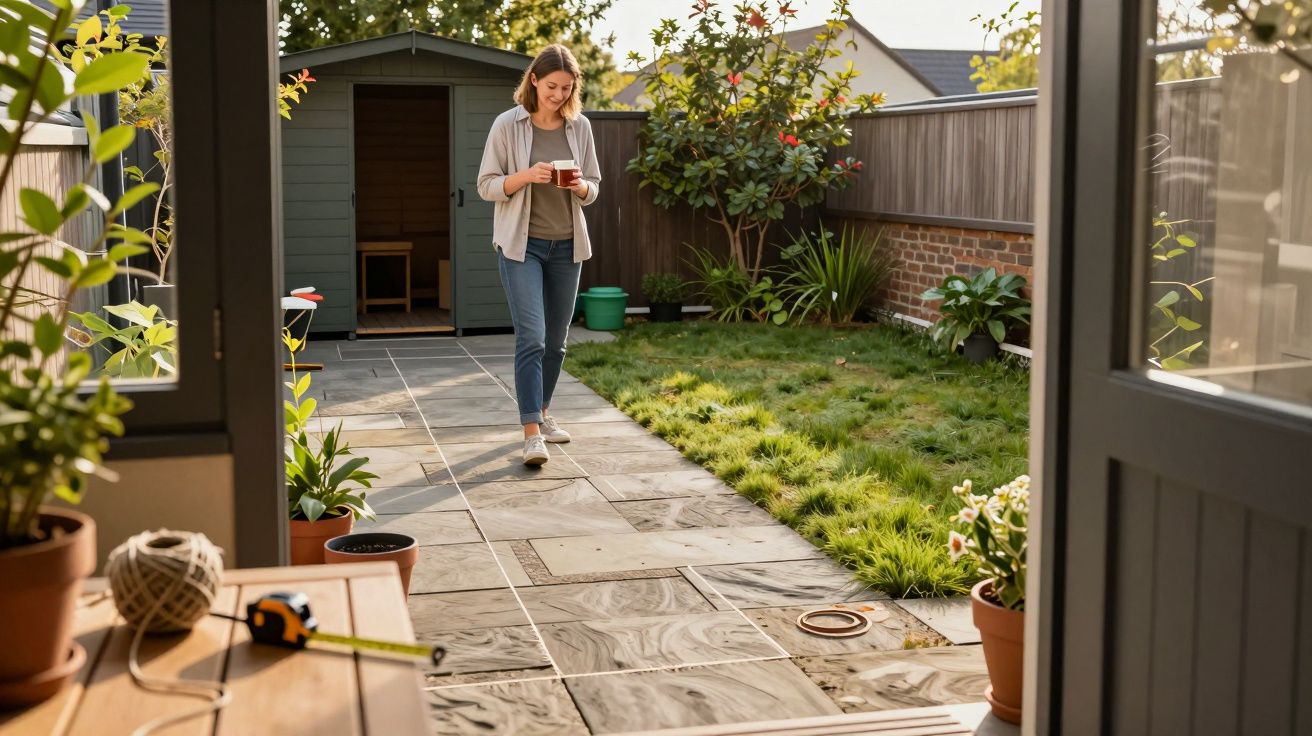
I’m watching a designer pace out a back garden like a tailor measuring cloth. Landscape design looks, from the outside, like choosing plants and placing a path, but professional gardening starts earlier than that: with the gaps, the routes, the places your body pauses. It matters because most gardens don’t fail for lack of flowers - they fail because they don’t feel easy to live in.
He doesn’t point at the border first. He points at the door. “Where do you step out with a cup of tea?” he asks, then stands still long enough to notice the wind. Two minutes later he’s moved the “main bed” in his head without touching a trowel, simply by making room for movement and making the view land.
Why good gardeners start with the empty bits
Space sounds like absence, but in a garden it’s the thing that makes everything else readable. A narrow path forces you to brush wet foliage every morning; a patio that’s half a metre too small becomes a chair graveyard. You can have beautiful plants and still feel slightly irritated every time you go outside, without knowing why.
Professional gardeners learn to see pressure points the way you notice them in a kitchen. Where you’ll drag a hose. Where muddy shoes will pause. Where the bin store will always be visible unless something interrupts the line of sight. It’s not precious. It’s practical, and it’s what makes a garden feel calm instead of busy.
The surprise is how quickly this changes decisions. Once you’ve agreed the “empty” bits - circulation, sightlines, pockets of pause - plant choice gets simpler, not harder. You stop shopping for specimens and start building a scene.
The three spaces that decide whether a garden works
Most domestic gardens need the same three types of space, even when they’re tiny. If one is missing, the rest has to compensate, and that’s when things start feeling cramped.
- Movement space: paths, turning circles, access to taps, sheds, bins, washing lines.
- Use space: somewhere to sit, eat, dry, play, potter - sized to the way you actually live.
- Breathing space: a clear patch that lets the eye rest (lawn, gravel, paving, mulch, water, even shade).
Notice what’s not on the list: “a border”. Borders are brilliant, but they’re an edge treatment. The room comes first.
A quick test you can do today
Stand at your back door and walk to the furthest point you use weekly - bin store, shed, compost, side gate. Don’t weave. Don’t step onto beds. If you have to shuffle, the garden is telling you something about space.
Then stand in three places: by the door, at your favourite seat, and at the back boundary. In each spot, ask: what do my eyes bump into first? A fence panel? A cluttered corner? A blank wall? That “bump” is usually where a small change in spacing (or screening) will give you the biggest lift.
How “seeing space” changes plant choices (in a good way)
When the layout is doing its job, plants don’t have to. That’s a relief for your budget and your weekends. Instead of relying on constant colour to keep interest, you can use a few structural performers and let the rest be seasonal.
A gardener who starts with plants often ends up squeezing. One more shrub becomes one less path. One more pot becomes one less place to put your feet. Starting with space creates boundaries that protect the planting from your own enthusiasm.
Think in layers that match the spaces you’ve defined:
- Edges: low, tidy plants that won’t collapse onto routes (or demand weekly trimming).
- Screens: taller planting where you need privacy or to hide utilities - placed to block views, not eat the whole garden.
- Anchors: a small number of shapes that stay present in winter (evergreens, grasses, multi-stem trees).
- Fills: the fun bits - bulbs, perennials, annuals - that can change without the garden falling apart.
“If you make the movement and the pause feel right, the planting can be simpler and still look more expensive,” says a landscape designer in Bristol. “Space is the invisible hard landscaping.”
The 30‑minute “space-first” plan for an ordinary garden
You don’t need a drawing app. You need a tape measure, chalk or string, and permission to be basic for a moment.
- Mark your main route (door to gate/shed/bins) at a comfortable width. Aim for around 90–120cm if you can; less feels tight, more feels luxurious.
- Choose one sitting spot and mark the footprint of what you’d actually use: two chairs and a small table, a bench, or a dining set. Include chair pull-out space.
- Reserve a breathing rectangle - a clear zone that isn’t “for” anything except visual rest. This is where the garden stops arguing with itself.
- Only then outline planting areas around those spaces, like you’re dressing the edges of a room.
If it feels stark, you’re probably doing it right. The urge to fill every gap is strong, especially if you love plants. Sit with the emptiness for a day; notice how it changes your sense of scale.
Common mistakes that steal space without you noticing
Gardens get crowded by accident. It’s rarely one bad decision; it’s ten small ones that felt reasonable at the time.
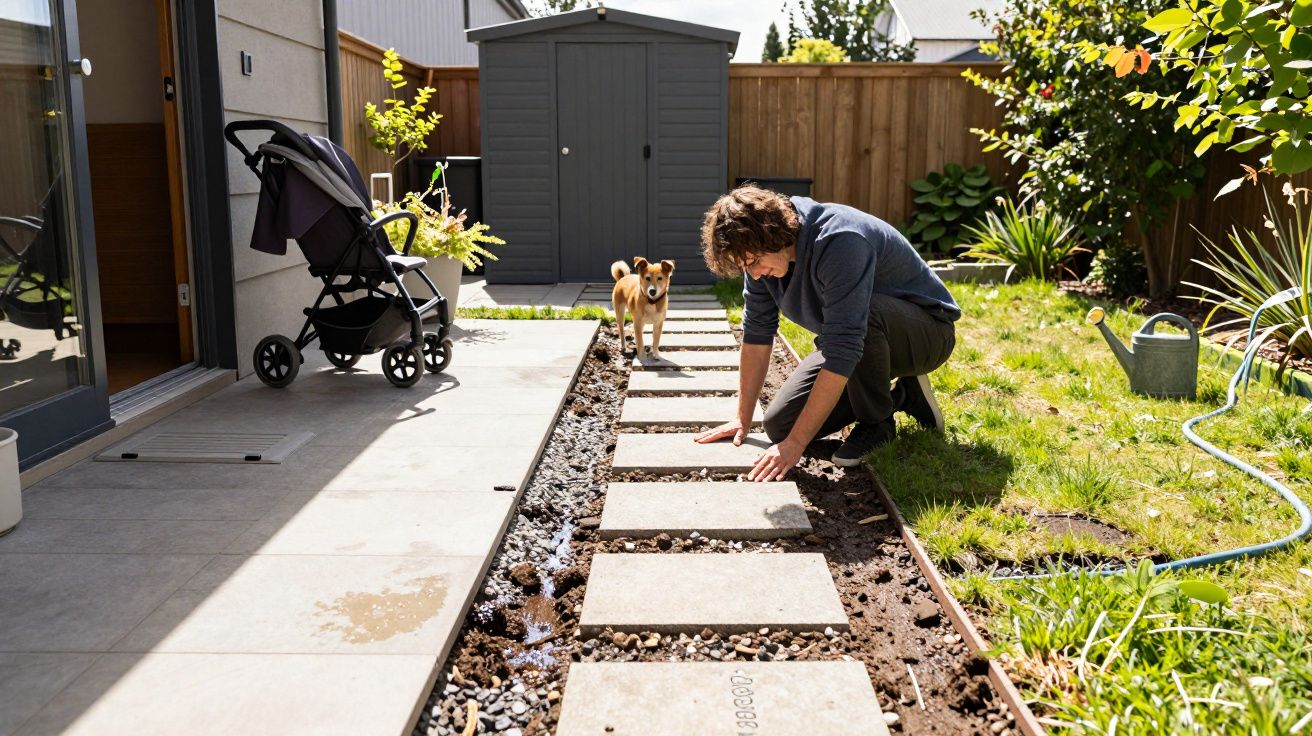
- Paths that pinch at corners, especially near doors and steps.
- Beds that are too deep to reach, so you step in them and compact the soil.
- A patio sized for the photo, not the people, so furniture migrates onto the lawn.
- Planting right up to the boundary everywhere, leaving no depth changes and nowhere for the eye to land.
- Too many “features”, each shouting for attention: a pergola, a fire pit, a pond, a bar, a swing, a raised bed, three arches.
The fix is often subtraction. Remove one thing, widen one route, clear one sightline. The garden will feel like it grew up overnight.
| Space to design first | What it does | What it prevents |
|---|---|---|
| Movement space | Makes the garden usable in all weather | Trampled beds, constant mess, narrow pinch points |
| Use space | Supports how you actually live outdoors | Furniture clutter, unused patios, awkward seating |
| Breathing space | Gives the eye rest and scale | Visual noise, “busy” planting, cramped feel |
FAQ:
- Do I need hard landscaping to “create space”? Not always. Space can be lawn, gravel, bark, even a wide mulch strip. The key is a clear, intentional area that stays clear.
- My garden is tiny - won’t space-first make it feel emptier? It usually makes it feel bigger. One clean route and one calm focal area read as generous; lots of little beds read as clutter.
- Where do raised beds fit into this approach? Treat them as furniture in your use space, not as borders. Allow standing and turning room around them, and keep access routes dry.
- How do I stop myself overplanting later? Decide your “no-plant zones” early and stick to them. If you want more colour, add it in pots that can move, not in every spare inch of soil.
- What’s the single best upgrade for flow? Widen the most-used path and make the turn near the door generous. If your first ten steps outside feel easy, the whole garden feels easier.


Comments (0)
No comments yet. Be the first to comment!
Leave a Comment