Professional gardeners rarely treat water as unlimited because garden maintenance is full of small decisions that add up: what you plant, where you plant it, and how you deliver moisture. Water is expensive in dry spells, restricted in others, and easy to waste when you rely on habit instead of observation. The good news is that the “pro” approach isn’t fancy-it’s deliberate.
They don’t chase a perfect-looking surface every afternoon. They build soils and systems that stay steady between waterings, so plants cope better and you spend less time dragging hoses around.
Why “more water” is usually the wrong fix
Most gardens aren’t short of water so much as short of water where roots can use it. A quick sprinkle wets leaves and the top centimetre of soil, then evaporates. The plant still wilts later, and you assume it needs even more.
Professionals look for the real issue: shallow roots, compacted soil, wind exposure, poor mulching, or planting the wrong species in the wrong spot. Once you solve that, watering becomes a support act, not a daily rescue.
Watering should reach the root zone, not just darken the surface.
The professional rule: depth beats frequency
A deep watering encourages roots to travel down, where moisture lasts longer and temperature swings are gentler. Frequent light watering trains roots to hover near the surface, making plants dependent and quick to stress.
Aim to water thoroughly, then wait. How long you wait depends on soil type, plant age, and weather, but the pattern is consistent: soak, pause, check, then soak again only when needed.
A simple “spade test” you can do in 30 seconds
You don’t need a moisture meter to be accurate enough.
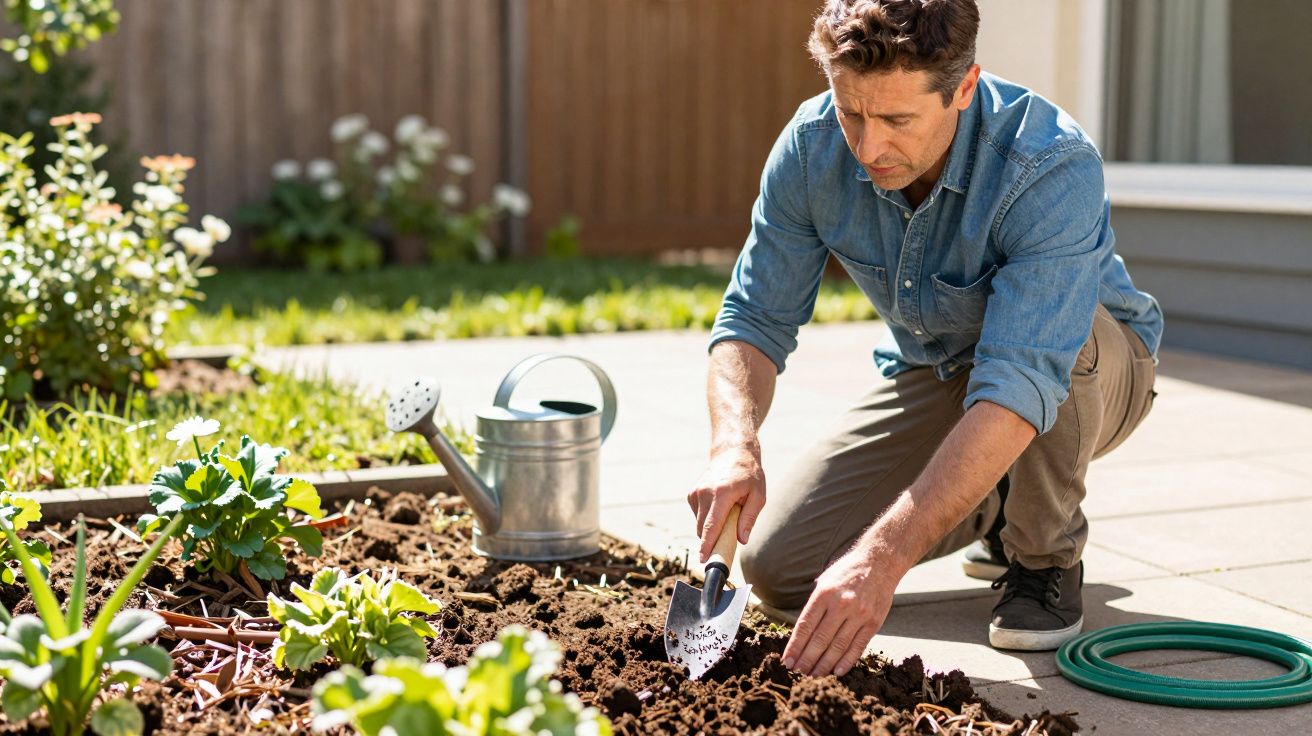
- Push a trowel or spade in 10–15cm near the plant (not right at the stem).
- Lift a small wedge of soil.
- If it’s cool and slightly cohesive, you can likely wait.
- If it’s dusty and loose throughout, water deeply.
Do the test in two spots: one sunny, one sheltered. Gardens don’t dry evenly.
Deliver water where it matters
Sprinklers feel productive, but they throw water onto paths, fences, and air. Targeted delivery reduces waste and disease pressure because foliage stays drier.
Choose the least-wasteful option you’ll actually use
- Drip line or seep hose: Slow, root-level watering with minimal evaporation.
- Watering can: Surprisingly efficient for containers and young plants if you pour slowly.
- Hose with a trigger and a low-flow rose: Good compromise when you can’t install irrigation.
If you do use a sprinkler, run it early, keep sessions longer and fewer, and move it deliberately rather than “setting and forgetting”.
Timing: professionals water for the weather, not the clock
Early morning is the default because it reduces evaporation and gives leaves time to dry. Evening can work too, especially in hot spells, but damp foliage overnight can increase mildew on susceptible plants.
The bigger point is responsiveness. A cool, cloudy week can cut water needs dramatically, while a windy day can dry beds faster than a sunny one.
- Water after planting, after pruning that exposes soil, and before a forecast heat spike.
- Hold back after steady rain, even if the top looks crusty.
- Treat wind as a “hidden drought”.
Mulch is a watering tool, not a decoration
A bare soil surface loses moisture quickly and swings in temperature. A mulch layer buffers both, and it makes watering more effective because water infiltrates rather than flashing off.
Use what suits the area:
- Compost or leaf mould: Best for improving soil over time (top up little and often).
- Bark chips: Great around shrubs and perennials; longer lasting.
- Gravel: Useful in Mediterranean-style beds; reflects heat, so plant choice matters.
Keep mulch a few centimetres away from stems to avoid rot and slug hiding spots.
Soil structure: the quiet reason some gardens always look thirsty
Compacted soil repels water at first, then puddles, then dries into a hard layer. Professionals spend time on structure because it reduces watering demand for years.
- Add organic matter to improve infiltration and water-holding.
- Avoid working soil when it’s saturated; you’ll squeeze the air out.
- Aerate lawns and heavily trodden beds so rain can soak in rather than run off.
If water runs away from a bed onto the path, the answer is rarely “water longer”. It’s usually “help the soil accept it”.
Planting choices that cut watering without making the garden dull
A low-water garden doesn’t mean gravel and spiky plants only. It means matching plants to conditions and grouping them by need so you’re not overwatering one area to keep another alive.
- Put thirstier plants nearer the house or a tap where you’ll notice and reach them.
- Use drought-tolerant perennials and shrubs for the far edges and hot boundaries.
- Prioritise deep-rooters and plants with silvery, hairy, or small leaves in exposed sites.
New plantings do need consistent moisture while they establish. Pros water more at the start so they can water less later.
A practical watering routine that mirrors how pros work
This is a simple rhythm you can repeat without overthinking:
- Walk the garden first. Look for drooping that persists in the morning, not midday sulking.
- Check soil moisture. Use the spade test near key plants.
- Water the priority areas. Containers, new plants, and anything in full sun first.
- Apply water slowly. Pause if it runs off; come back for a second pass.
- Stop early on purpose. It’s easier to add a bit tomorrow than to undo root problems from constant wetness.
The goal isn’t maximum moisture. It’s stable moisture where roots live.
Common “water waste” mistakes professionals avoid
- Watering at midday because it’s convenient, then needing to repeat.
- Spraying leaves instead of soaking the soil.
- Watering every bed the same, regardless of shade and soil type.
- Leaving irrigation on after rain because “it’s scheduled”.
- Ignoring leaks at connectors and taps-small drips add up fast.
When to break the rules
There are exceptions, and pros make them calmly. Seedlings and shallow-rooted annuals need more frequent watering, especially in containers. Newly laid turf needs careful, consistent moisture until roots knit in.
Heatwaves also change the game. In extreme conditions, temporary shade, windbreak netting, and a thicker mulch often save more water than simply increasing watering time.
FAQ:
- How do I know if I’m watering deeply enough? Dig a small check hole after watering. Moist soil should extend down towards 15–20cm for many garden plants (more for shrubs), rather than just wetting the surface.
- Is rainwater always better than tap water? Rainwater is softer and great for pots and acid-loving plants, but tap water is fine for most garden use. The bigger win is using any water efficiently and at the right time.
- Should I water little and often in summer? Usually no-deep, less frequent watering builds stronger roots. Use “little and often” mainly for seedlings, hanging baskets, and very new plantings.




Comments (0)
No comments yet. Be the first to comment!
Leave a Comment