
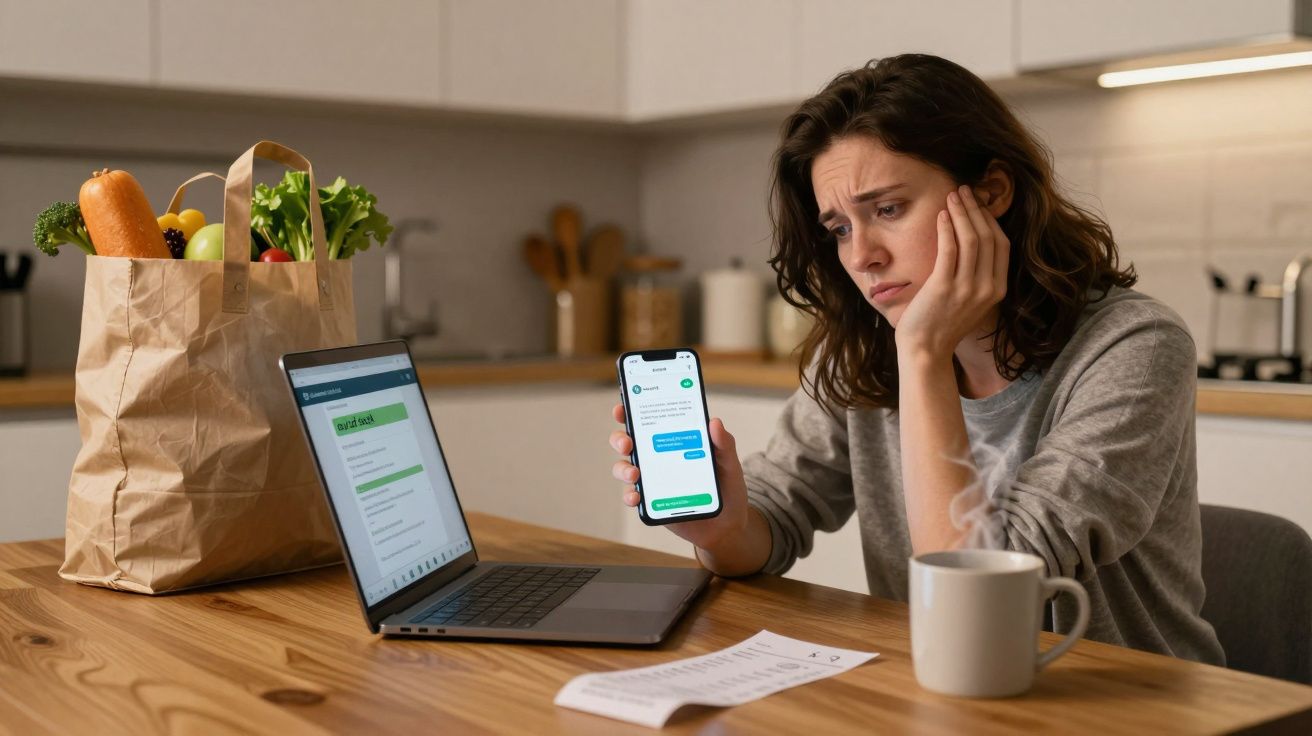
Last Tuesday, while replying to a message that began “of course! please provide the text you would like me to translate.”, I ate plums over the sink like a minor act of rebellion. Juice ran down my wrist, my laptop pinged again, and I realised I’d accidentally done something useful: I’d chosen a snack that wouldn’t spike me, slump me, and send me rummaging for biscuits an hour later.
Plums are not a superfood with a marketing team. They’re just a small, ordinary detail you can repeat, quietly, until the repetition starts doing the heavy lifting.
The overlooked fruit that behaves like a system
We tend to treat fruit as decoration. A virtuous side. Something you buy with good intentions and then watch wrinkle in the bowl. But plums are different because they’re practical: portable, satisfying, and sweet enough to feel like a treat without tasting like a compromise.
There’s also something psychologically tidy about them. One plum is a clear unit. It has a beginning and an end. It doesn’t demand a chopping board, a yoghurt to “make it a meal”, or a new identity as “healthy dessert”. You eat it, you move on.
The power here isn’t drama. It’s the ease of doing the same decent thing again tomorrow.
Why “small” matters more than “perfect”
Most health advice collapses under the weight of ambition. We plan the new breakfast regime, the batch cooking, the protein targets, the colour-coded groceries. Then life does what it does, and we’re back at a petrol station meal deal pretending it’s fine.
Plums fit into real life because they don’t require you to become a different person. They slip into the cracks: the 3pm lull, the “I’m starving but dinner’s ages away” moment, the commute, the child’s snack request you don’t want to turn into a negotiation.
Over time, these are the moments that decide your baseline. Not your best day. Not your “reset Monday”. Your average Tuesday.
The useful bits (without turning this into a lecture)
Plums bring a few advantages that add up when you repeat them:
- Fibre, which helps with steadier energy and makes “one plum” actually feel like something.
- Water content, which quietly fixes that low-grade dehydration that masquerades as hunger.
- Natural sweetness, which can reduce the urge to chase dessert out of habit rather than appetite.
None of this is magic. It’s just a better default.
How to use plums in the boring parts of life
The obvious use is “eat plum”. The more helpful use is “replace a pattern”. If you always grab something processed at the same time each day, that’s a groove. Plums give you a way to change the groove without a whole personality overhaul.
Here are three low-friction swaps that work because they’re specific:
- The desk drawer rescue: keep two plums in your bag and eat one before you open the snack cupboard “to look”.
- The post-school bridge: one plum plus a handful of nuts buys you time until dinner without the sugar crash.
- The late-night sweet habit: slice a plum into a bowl, add plain yoghurt or cottage cheese if you want, and call it done.
A plum won’t fix your schedule. But it can stop your schedule from turning into sugar and regret.
Choosing them so they don’t disappoint you
Plums have a narrow window between “hard and sour” and “brown and leaking”. The trick is to buy across ripeness so the week doesn’t fall apart.
- Pick one or two slightly soft (for now) and the rest firmer (for later).
- If they’re rock-hard, leave them at room temperature for a day or two, then refrigerate.
- If they’re very ripe, eat them first or slice and freeze for smoothies.
You’re not curating a fruit experience. You’re building a reliable option.
The long-game benefit: fewer decisions, fewer spirals
The biggest difference plums make isn’t nutritional. It’s behavioural. When you have a simple, repeatable “good enough” choice available, you stop bargaining with yourself all day.
It’s the same logic as keeping a spare charger in your bag. You’re not becoming a better person. You’re reducing the number of tiny emergencies that drain your willpower.
And because plums feel like actual food-sweet, fragrant, slightly messy-they don’t trigger that “I’m being deprived” panic. They’re a small pleasure that happens to be useful.
A tiny protocol that’s easier than motivation
If you want to make plums a habit rather than a nice idea, keep it embarrassingly simple:
- Buy six plums when you do your normal shop.
- Put two where you’ll see them (counter, fruit bowl, front of the fridge).
- Put two in your bag on weekday mornings.
- Eat one a day at the time you’re most likely to snack badly.
That’s it. No tracking. No rules about “clean eating”. Just a small decision repeated until it becomes a default.
When plums aren’t the answer (and what to do instead)
Sometimes plums won’t suit you. Maybe you’re sensitive to certain fruits. Maybe you’re managing blood sugar. Maybe you simply don’t like them, which is allowed.
The idea still holds: choose one small, repeatable thing that fits your real life. Grapes, apples, satsumas, carrots and hummus-anything that can live in your bag and doesn’t require a new identity.
Plums are just a good example because they’re easy to like, easy to carry, and easy to finish. They’re a tiny, practical yes in a day full of noise.
FAQ:
- Are plums better fresh or dried? Fresh are easier as a daily habit and usually gentler on calories; dried plums (prunes) are convenient but more concentrated, so portions matter more.
- How do I know a plum is ripe? It should give slightly to a gentle squeeze and smell sweet near the stem; avoid fruit that’s hard as a stone or already leaking.
- Can I prep them in advance? Yes. Wash, dry, and keep them in the fridge; for ultra-ripe plums, slice and freeze for smoothies or to stir into yoghurt.



Comments (0)
No comments yet. Be the first to comment!
Leave a Comment