Landscaping is full of tiny choices that feel cosmetic in the moment - a tweak here, a tidy there - yet in a private garden those choices quietly decide whether the whole place thrives or limps along. One habit in particular looks like simple neatness, even kindness, but it changes your soil, your plants, and your workload for years. It’s the sort of thing you do on a Sunday afternoon and only later realise you’ve been editing the garden’s physics.
I noticed it first at the edge of a neighbour’s border: everything looked “finished”, clipped and clean, and yet nothing seemed to grow with any enthusiasm. The beds dried fast, the shrubs sulked, and weeds still turned up with the confidence of people who know the rules better than you do. The problem wasn’t effort. It was what kept happening to the ground.
The tidy habit: stripping beds bare (and exporting the good stuff)
It usually starts innocently. You rake out every fallen leaf, pull every fading stem, bag up the clippings, and leave the soil looking smooth and empty - as if a bare bed is a cared-for bed. It photographs well. It also removes the garden’s slow-release system and exposes the soil to the harshest versions of weather.
Here’s the uncomfortable truth: bare soil is not “resting” soil. It’s stressed soil. The moment you strip off the protective layer, you invite a cycle of drying, compaction, temperature swings, and nutrient loss. Then you compensate with more watering, more feeding, more weeding - and the garden becomes a weekly job rather than a living system.
Think of it like taking the roof off your house because you want it to feel fresh. The air improves for an hour. Then the rain arrives.
Why it looks harmless (and why it isn’t)
Most of us learned tidiness as care. Bagging up “garden waste” feels responsible, and there are times it is: diseased material, pernicious weeds, seed heads you genuinely don’t want spreading. But blanket clearance - the habit of removing everything, all the time - is landscaping by subtraction, and the bill shows up later.
What you remove when you over-tidy:
- Organic matter, which is the basis of soil structure and fertility.
- Moisture buffering, because a covered soil holds water longer and more evenly.
- Habitat, for worms, beetles, fungi, and the quiet workforce that turns litter into feed.
- Shade, which suppresses some weed germination simply by blocking light.
What you add by accident:
- Crusting and compaction, especially on clay or heavily walked edges.
- Rapid drying, particularly in windy or sunny spots.
- Nutrient leaching, as rain hits exposed soil and flushes goodness down and away.
- A perfect seedbed for weeds, because disturbed, exposed soil is an invitation.
Let’s be honest: nobody really does “soil stewardship” every day. You do what makes the space look better quickly. The trick is choosing a “quick” that doesn’t boomerang.
The alternative: keep the ground dressed
The gentler habit is not laziness. It’s dressing the soil like you mean to live with it.
Aim for one of these, most of the year:
- A living cover (plants close enough that you don’t see much soil).
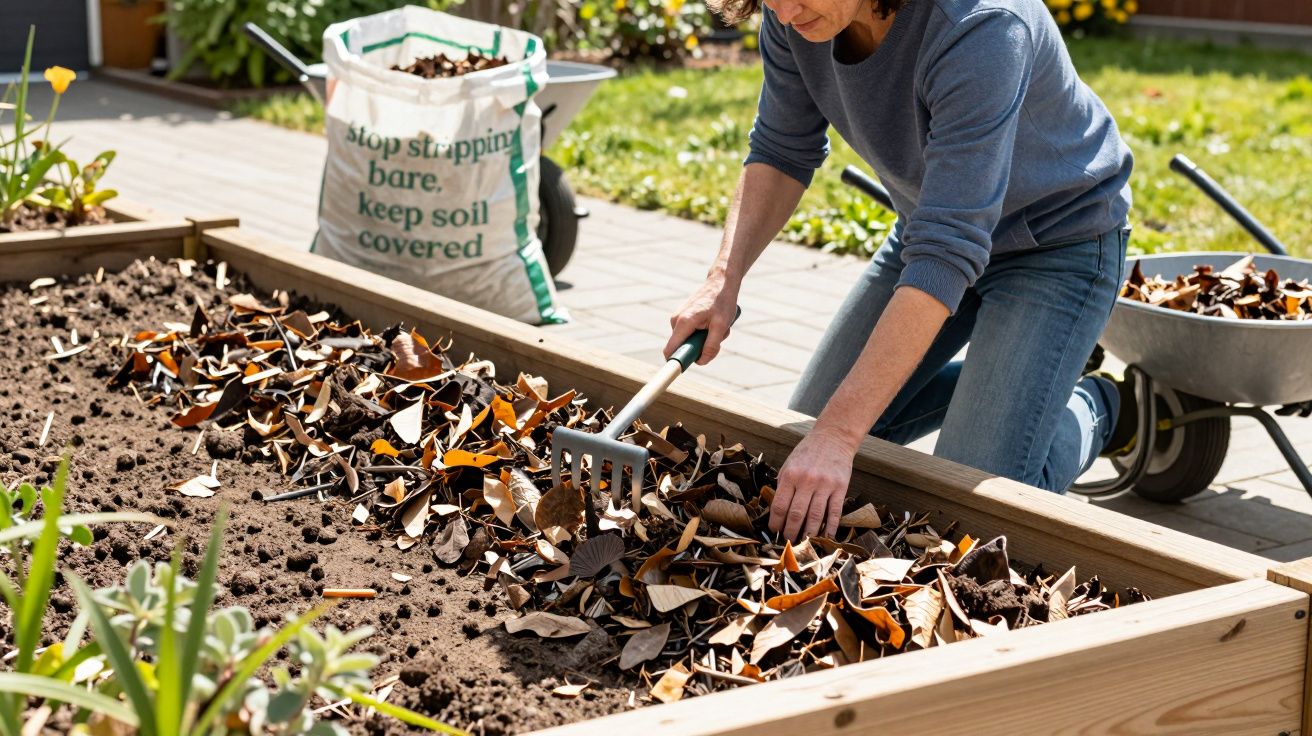
- A dead cover (mulch: leaves, compost, woodchip, or chopped stems).
- A temporary cover (green manure, or even a layer of leaf mould while beds are empty).
If you do one thing this season, do this: stop trying to make beds look “naked clean”. Make them look “comfortably occupied”.
A simple rule for what stays and what goes
Not everything belongs on the bed, and pretending it does is how you end up nurturing slugs like they’re pets. Use a basic filter:
Keep (on the soil, as cover): - Healthy fallen leaves (shred if they’re thick, like sycamore or plane) - Chopped, disease-free perennial stems - Grass clippings in thin layers, mixed with browns (or composted first) - Finished compost or leaf mould
Remove (or hot-compost / bin): - Anything with clear fungal disease (e.g., blackspot-laden rose leaves) - Seed heads from plants you don’t want everywhere - Persistent weeds with roots intact (bindweed, horsetail, ground elder) - Woody prunings that won’t break down quickly unless chipped
The point isn’t perfection. It’s direction: keep nutrients cycling on-site whenever it’s safe.
What changes when you stop exporting everything
The first change is not dramatic. It’s a subtle easing - the garden stops swinging between extremes.
You’ll notice:
- Beds stay damp longer after rain, and watering becomes less frantic.
- Soil becomes easier to dig (or easier to not dig), with fewer hard clods.
- Plants cope better with heat because root zones don’t bake.
- Weeds shift: you may get fewer flushes of tiny seedlings, and more of the occasional opportunist you can pull easily.
And then there’s the psychological shift, which matters more than most landscaping advice admits. The garden stops asking to be “reset” every weekend. It starts asking to be observed.
“Neat” isn’t the same as “healthy”. A garden can look orderly while quietly starving.
A 20-minute reset for a private garden bed
If your beds are currently bare, you can change the trajectory without turning it into a project.
- Weed once, properly: lift roots where you can; don’t just snap tops off.
- Water the bed if it’s bone dry (mulch locks in whatever moisture is there).
- Add 2–5cm of compost around plants, not piled against stems.
- Top with a mulch layer: leaf mould, shredded leaves, or fine woodchip (keep it modest).
- Leave a small clear collar around crowns of perennials to reduce rot.
You’re not “messing up the look”. You’re changing the bed from a display surface into a functioning floor.
Common traps (that keep the cycle going)
A few patterns keep people stuck in bare-soil landscaping, even when they know better.
- Mulching too thinly, like dusting icing sugar. It needs to be a layer, not a suggestion.
- Mulching onto dry soil and expecting miracles. Water first, then cover.
- Treating woodchip like compost. Chip is great on top; compost feeds beneath.
- Disturbing soil constantly with hoeing and “freshening up”. Disturbance brings weed seeds to light.
- Clearing leaves from everywhere. Lawns and paths, yes; borders, not automatically.
If you want the garden to be lower effort, resist the habits that create fresh work.
| Shift | What you do instead | What you get back |
|---|---|---|
| Stop bareness | Keep soil covered | More stable moisture and temperature |
| Stop exporting | Compost/mulch on-site (when safe) | Better fertility over time |
| Stop constant disturbance | Weed less often, more deliberately | Fewer weed flushes |
FAQ:
- Isn’t leaving leaves messy and sluggy? It can be if you pile them thickly against plant crowns. Shred leaves or keep them as a thin layer, and leave breathing space around vulnerable plants.
- What’s the best mulch for a small private garden? Compost plus leaf mould is hard to beat: compost feeds, leaf mould conditions and holds moisture. Woodchip works well on paths and around shrubs.
- When should I still clear everything out? When you’re dealing with disease, invasive weeds, or seed heads you genuinely don’t want spreading. Targeted clearing is different from blanket stripping.
- Will mulching stop weeds completely? No, but it changes the odds. A decent layer reduces germination and makes the weeds that do appear easier to pull from softer soil.





Comments (0)
No comments yet. Be the first to comment!
Leave a Comment