Leeks are the vegetable you buy when you want dinner to feel wholesome without trying too hard: sliced into soup, softened in butter for a pie, or scattered through a pasta bake. Yet the most common disappointment with leeks starts with a line that could have been printed on the label: it seems there is no text provided to translate. please provide the text you would like translated to united kingdom english. There’s “nothing to translate”, you think - nothing to decode - because leeks look straightforward.
Then you bite into grit, or you cook them and they turn oddly tough, or they melt into something sweet and you wonder if you’ve done it wrong. You haven’t. You’ve just met the catch most consumers miss.
The leek illusion: tidy on the outside, muddy in the middle
Leeks are built like a promise. Pale stem, neat green leaves, a shape that looks clean and contained. In the shop they sit there like oversized spring onions, implying they’ll behave the same way once you get them home.
But a leek isn’t a sealed stick. It’s layers, wrapped tightly enough to trap soil and sand where you can’t see it. Farms mound earth up around the growing leek to keep the lower part pale and tender, and that earth doesn’t politely stay outside when you chop.
That’s why people swear they “washed it” and still get crunch. They rinsed the outside. The grit is living between the pages.
Where the dirt hides (and why rinsing doesn’t fix it)
The worst of it sits where the white turns to pale green, exactly where you want to cook. If the leek has a wider core or it’s been harvested wet, the soil can lodge surprisingly deep.
A quick run under the tap won’t reach it, because water beads off the leaves and never gets into the seams. You need separation. You need time. You need to treat it less like a cucumber and more like a book you’re shaking sand out of.
The five-minute clean that saves your whole dish
There’s a reason leeks have a reputation for being “fiddly”. It’s not the cooking. It’s the cleaning, and it only feels annoying until you do it once properly and realise how much nicer everything tastes without surprise grit.
Here are three reliable approaches, depending on what you’re making:
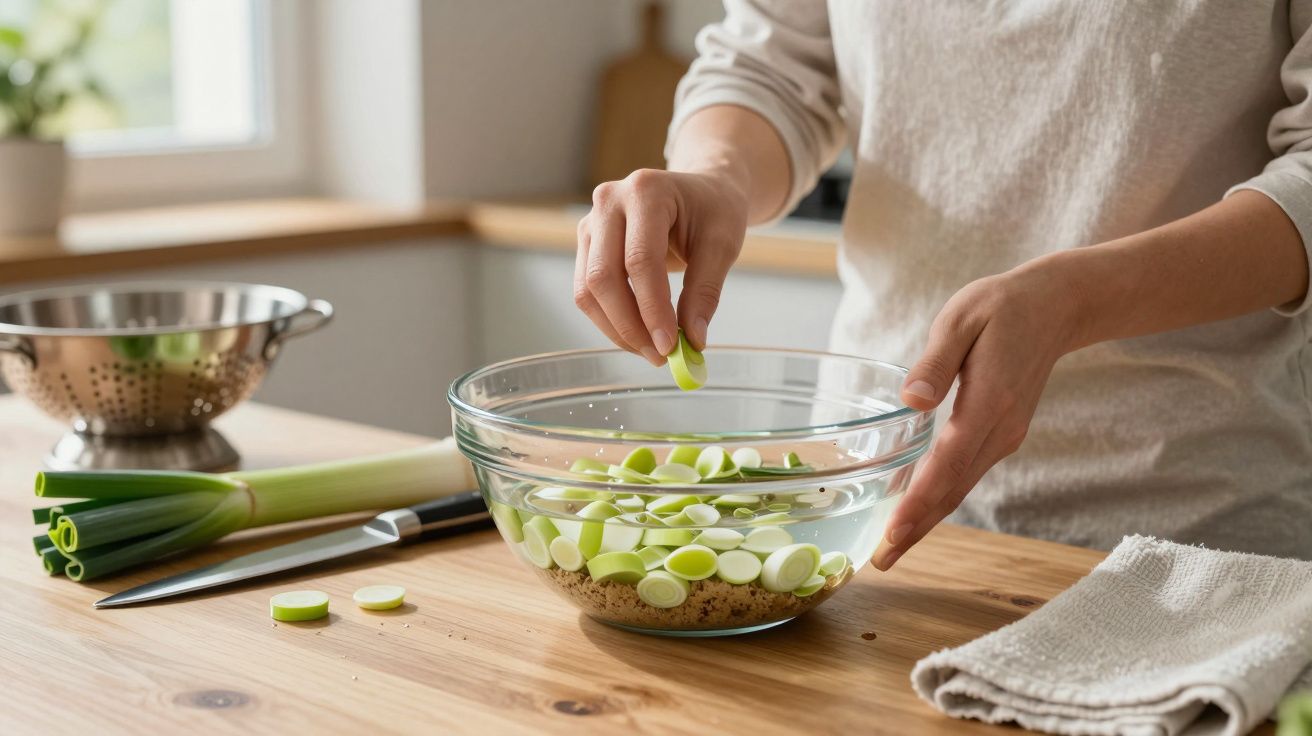
- For slices (soups, stews, risotto): Trim the root end and dark green tops. Slice the leek into coins, then swish the coins in a big bowl of cold water. Let them sit for 30–60 seconds so grit drops to the bottom, then lift the leeks out with your hands or a spider (don’t pour the bowl through a sieve or you’ll tip the sand back over them).
- For halves (braised leeks, grilling): Split lengthways, keeping the root end intact to hold it together. Fan the layers under running water, rubbing gently where the layers meet. Pat dry well before cooking so they actually brown.
- For matchsticks (stir-fries, tarts): Slice lengthways into thin strips, then soak and swish in water like above. Dry thoroughly; wet leeks steam rather than soften sweetly.
The “lift out, don’t drain” detail is the whole trick. Your bowl becomes a little sand trap, and you want the sand to stay trapped.
If you’ve ever wondered why your leek soup tastes vaguely like the bottom of a handbag, it wasn’t your stock. It was the bit you didn’t see.
The other catch: leeks have two personalities
Even when they’re clean, leeks can still confuse people because they cook in two very different ways. Sometimes they turn silky and sweet. Sometimes they stay fibrous, like you’re chewing damp string.
That split usually comes down to which parts you used and how hard you pushed the heat.
White and pale green: the “I melt if you’re patient” zone
This section is where leeks earn their cult following. Cooked slowly in butter or olive oil with a pinch of salt, they collapse into something almost creamy, the base note of countless comforting dishes.
If you rush them on high heat, they can brown too fast on the outside and stay firm inside. Low to medium-low, lid on for part of the time, and a splash of water if the pan looks dry - that’s how you get the soft sweetness people talk about.
Dark green tops: useful, but not in the way you think
The darkest leaves are tougher and more fibrous. They can be eaten if sliced very finely and cooked long enough, but most weeknight meals aren’t long enough.
Where they shine is flavour: stock, broth, a bundle tucked into a pot of beans. Treat them like an herb that happens to be a leaf.
- Use dark greens in homemade stock (freeze them until you have a bagful).
- Add a strip to rice or lentils while they cook, then remove.
- Slice ultra-thin and sauté longer if you genuinely want them in the dish.
This is the bit many consumers miss: a leek isn’t one ingredient. It’s two (sometimes three) with different jobs.
Choosing leeks that won’t disappoint you at home
It’s tempting to grab the biggest leeks because it feels like value. But very large leeks can be older, with a bigger core and more robust fibres. Not always, but often enough that it’s worth paying attention.
A quick shop-floor checklist:
- Look for firm leeks with tight layers and no wobble.
- Prefer more white and pale green, less dark green bulk.
- Avoid split or heavily flared tops, which can mean more trapped debris.
- Don’t panic about a bit of mud on the outside - it’s normal - but do avoid ones that look waterlogged or slimy.
And if you’re buying pre-trimmed leeks in plastic, remember: tidy doesn’t mean clean. You still need to wash.
The simple cooking pattern that makes leeks taste expensive
Once they’re properly cleaned, leeks reward a boring approach: gentle heat, enough fat, enough time. This is how you get that soft, oniony depth without harshness.
- Slice and wash.
- Dry well (tea towel or salad spinner).
- Warm butter/olive oil in a pan on medium-low.
- Add leeks + salt, stir, then cover for 5–8 minutes.
- Uncover and cook until collapsed and sweet, adding a splash of water if needed.
From there, they can go anywhere: stirred into mashed potatoes, folded into crème fraîche with pasta, layered under fish, or used as the backbone of a soup that tastes like it took all afternoon.
Watchpoints that ruin leeks fast
- High heat from the start: they scorch before they soften.
- Not drying after washing: they steam and stay watery.
- Using too much dark green without enough time: you get chew, not silk.
FAQ:
- Do I really need to wash leeks if they look clean? Yes. Dirt commonly sits between the layers, so a rinse on the outside won’t remove it.
- Why are my leeks still gritty after washing? You likely drained the wash water through the leeks. Let the grit settle, then lift the leeks out, leaving the sediment behind.
- Can I eat the dark green part? You can, but it’s tougher. It’s best for stock, or slice very finely and cook longer.
- Why did my leeks turn tough instead of soft? Heat was too high, the pieces were too thick, or you used mostly dark green leaves. Cook lower and slower, and focus on the white/pale green section.



Comments (0)
No comments yet. Be the first to comment!
Leave a Comment