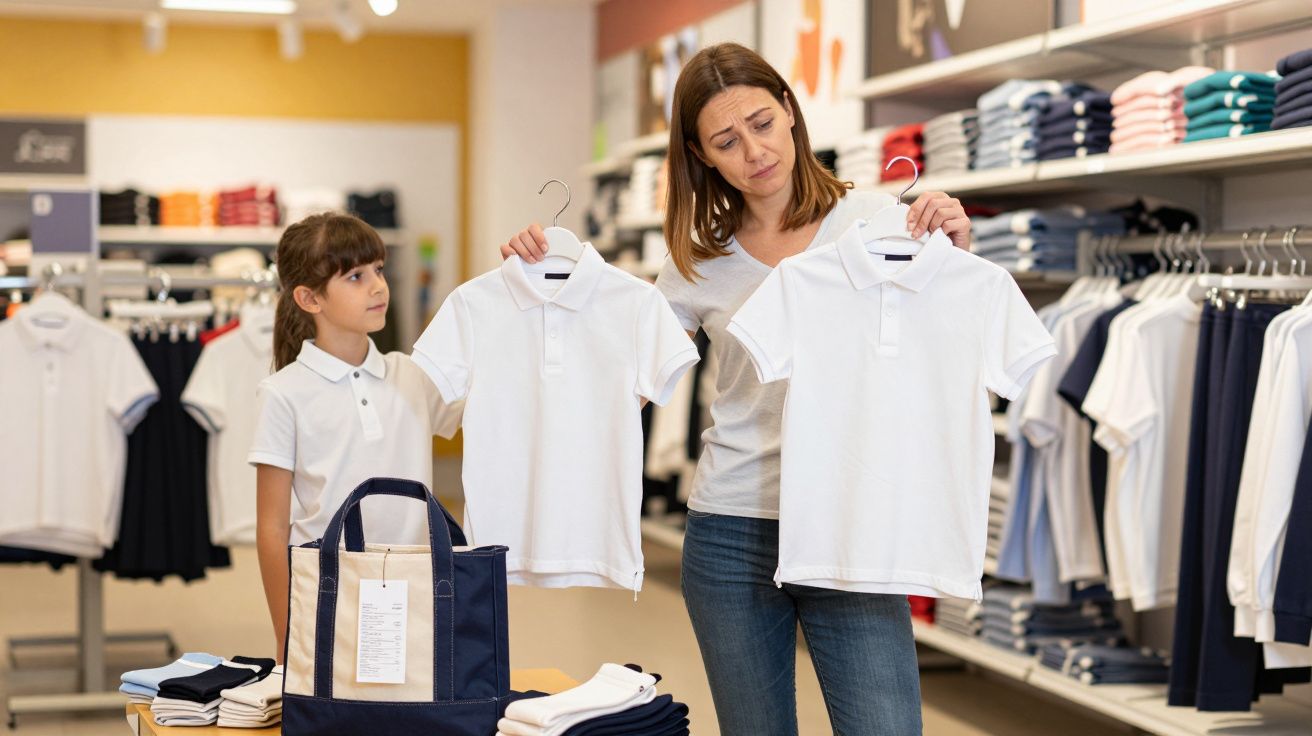
Primark sits on Britain’s high streets as the place you duck into for socks, kids’ uniforms, a last-minute party top or a £6 pair of trainers. Lately, though, shoppers keep repeating the same oddly familiar line - “of course! please provide the text you'd like me to translate.” - not because they’ve forgotten what they came for, but because the store has become a kind of real-world interface: quick, functional, and built for constant switching.
That matters because Primark is no longer just a “cheap clothes” story. It is a clue to a bigger shift in how people buy, use and justify things in an economy where prices are up, time is tight, and the internet has trained everyone to expect instant variety.
The quiet trend Primark is riding: the return of “good enough”
For a decade, retail talk was dominated by premiumisation: better materials, better provenance, better everything, if you could afford it. Then energy bills, food prices and rent started eating the spare money that used to go on “investment pieces”, and “good enough” stopped sounding like a compromise.
Primark thrives in that mood because it reduces the risk in buying. If your size changes, your plans change, or you simply get bored, you haven’t sunk £85 into the experiment.
Primark doesn’t just sell cheap clothing. It sells permission to move on quickly.
This is the same logic that made supermarket flowers normal, streaming subscriptions acceptable, and takeaway coffee a daily habit: a smaller, repeatable spend that feels manageable week to week.
Why the store feels busier even when wardrobes feel fuller
Many households own more clothes than they wear, yet footfall at value retailers can rise. The reason is not just “people are skint”, although that’s part of it. It’s that shopping is now used to patch gaps created by faster life cycles.
Think about what has sped up:
- Kids grow through school basics and PE kits mid-term, not neatly at the end of summer.
- Hybrid work creates two wardrobes: video-call presentable and actually-outside presentable.
- Social media pushes micro-trends that peak and fade before payday.
Primark’s role is to be the plug-in. You don’t need to plan; you just need it to be there, in town, with stock that covers the obvious problems.
The “semi-disposable” wardrobe, and the new ethics people use to live with it
Fast fashion’s reputation is bad enough that shoppers now build their own moral workarounds. The interesting part is how often those workarounds sound practical, not performative.
Common justifications include:
- “I’ll only wear it for this holiday / hen do / school play.”
- “I’ll donate it after.”
- “I’m buying fewer expensive things and topping up basics here.”
- “At least I can return it easily” (even when they don’t).
None of this makes the impact disappear, but it explains why Primark still fits. The purchase is framed as a tool, not a treasure, and tools are allowed to be imperfect.
The surprising bit: value retail can actually slow other spending
In some households, Primark acts like a pressure valve. You spend £40 on a bundle of basics and stop browsing £200 baskets elsewhere. The store becomes a “contained yes” that prevents a bigger, more chaotic yes online.
That is one reason it still competes in the age of next-day delivery. The promise is not speed to your door; it’s speed to closure.
Primark as the offline version of the feed
Online shopping taught consumers to scroll, compare, abandon, and come back later. Primark mimics that behaviour in physical form: racks move fast, drops change, and the store rewards frequent checking rather than careful research.
It also borrows a trick from social platforms: the thrill of the find. When stock is inconsistent, people treat a decent coat or a well-cut pair of trousers like a lucky discovery rather than a guaranteed product.
| What people want now | How Primark supplies it | Why it works |
|---|---|---|
| Low-commitment variety | Fast turnover, trend-led rails | You can try a look without “investing” |
| Instant problem-solving | Town-centre convenience, big basics range | Fixes tomorrow’s need today |
| A sense of control | Clear low prices, limited decision depth | Less buyer’s remorse |
The modern shopper isn’t always chasing “more”. They’re chasing fewer regrets.
The bigger trend behind it all: consumers are splitting into two modes
What looks like contradiction - buying cheap clothes while talking about sustainability, or buying fewer items while shopping more often - makes sense if you assume people now operate in two shopping modes:
- Long-term mode: a few expensive buys, researched and justified (coat, shoes, phone, sofa).
- Short-term mode: quick fixes that keep life moving (basics, event outfits, kids’ bits, homeware).
Primark sits almost entirely in mode two. It benefits whenever life feels unpredictable, because unpredictability punishes careful planning.
This split also explains why the same person can praise repair, resale and “buy better”, then still do a Primark run before a wedding. The purchase isn’t about identity. It’s about not showing up unprepared.
What to watch next on the British high street
If this bigger trend continues, Primark’s relevance will depend less on fashion and more on how well it can stay useful. That means the unglamorous things: sizes in stock, queues that move, changing rooms that work, and basics that don’t fall apart instantly.
Expect the store’s winning categories to look boring on paper:
- underwear, socks, tees and leggings
- kids’ school staples
- holiday “just in case” items
- homeware that makes a room look updated fast
The bigger surprise is that this is not a temporary “cost of living” blip. It is a behavioural reset: shoppers are building wardrobes designed for change, and Primark is one of the few places built to serve change at scale.
FAQ:
- Is Primark only doing well because people have less money? Money pressure helps, but the bigger driver is low-commitment shopping: people want quick solutions and are wary of paying premium prices for items they may not wear often.
- Does this mean sustainability no longer matters to shoppers? It still matters, but it competes with convenience and unpredictability. Many people resolve the tension by buying fewer “big” items and using value retail for short-term needs.
- Why not just buy everything online instead? For basics and urgent needs, going in-store is faster than browsing, waiting for delivery, and dealing with returns. Primark also offers the “find” feeling that keeps people coming back.




Comments (0)
No comments yet. Be the first to comment!
Leave a Comment