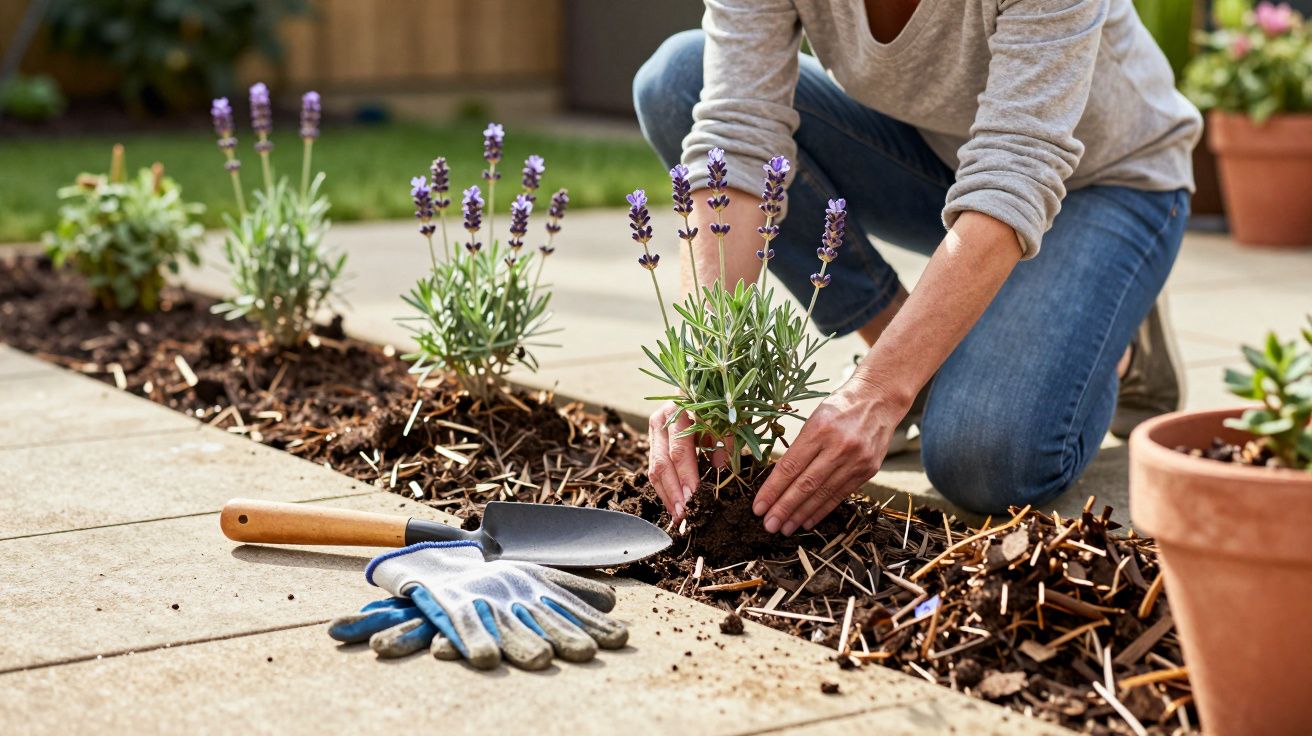
A gardener can spot a planting issue in seconds because they’ve seen it fail the same way, in the same place, hundreds of times. Planting services deal with this daily, especially when homeowners want ornamental plants to “look instant” and stay that way through a British winter. It matters because the fix is usually cheap and quick-if you catch it before the plant starts declining.
The funny part is that the problem rarely looks dramatic at first. Everything seems fine: fresh compost, neat edging, tidy mulch. Then, a few weeks later, the leaves dull, the growth stalls, and the owner starts blaming the plant, the weather, or the garden centre.
The issue professionals see straight away: plants set at the wrong level
Walk along a new border with someone who plants for a living and you’ll notice their eyes go to the base of every plant. They’re checking one thing: is the root flare where it should be, or has it been buried?
In plain terms, many ornamental plants are planted too deep (the stem is under soil or mulch), or occasionally too high (the root ball sits proud and dries out). Both cause stress, but “too deep” is the classic one-because it looks tidy, it feels secure, and it’s how lots of people try to hide an awkward pot-shaped lump.
A pro will often spot it without touching anything. The giveaway is the “volcano” of mulch or compost piled up the stem, or a plant that seems to disappear into the border instead of sitting on it.
Why it happens in normal gardens (and why it keeps happening)
Most owners are trying to do the right thing. They buy a plant in a pot, dig a hole, improve the soil, then backfill until it looks level and finished. The trouble is that pot level is not always planting level-nursery stock can be potted too deep, and fresh compost settles.
There’s also a very British urge to “firm it in” hard. People stamp the soil, heap mulch for weed control, and water heavily to settle everything. A week later, the soil drops, the mulch slides, and the crown ends up smothered.
If you’ve ever thought, I’ll just add a bit more compost on top to make it look nicer, you’ve met the problem.
What planting too deep actually does to ornamental plants
This isn’t garden folklore. Burying stems changes how the plant breathes, drains, and defends itself. The symptoms tend to look like vague “poor health”, which is why it’s missed.
Common knock-on effects include:
- Stem and crown rot where damp sits against tissue that’s meant to be dry
- Reduced oxygen around the root zone, especially in clay or compacted beds
- Weak, shallow rooting as roots stay in the softer top layer instead of anchoring
- Slower growth and leaf yellowing that gets blamed on feeding, not planting depth
- Increased pest and disease pressure, because stressed plants invite trouble
With shrubs and small trees, burying the trunk flare can set up years of decline. With perennials, it can be enough to wipe them out over a wet winter.
The quick “base check” gardeners do (you can copy it in 30 seconds)
You don’t need a soil test kit to diagnose this. You need your hand and a bit of honesty about what you’re looking at.
- Find the main stem(s) and look for where they widen slightly-this is often near the natural soil line.
- Pull mulch back in a dinner-plate circle around the plant.
- Scratch the surface with your fingers. If you hit stem before you hit roots, it’s likely too deep.
- Check for a damp collar: dark, soft, or slimy tissue at the base is a warning sign.
If the plant is sitting in a little bowl, or water seems to collect around it after rain, treat that as part of the same problem: depth and drainage are tied together.
How planting services fix it without making a mess of your border
A common assumption is that correcting planting depth means digging everything up and starting again. Sometimes it does. Often it doesn’t.
Professionals usually take the least disruptive route that still changes the physics around the plant:
- For plants slightly too deep: lift the surrounding soil away from the crown, then regrade so water sheds away rather than in.
- For mulch piled against stems: create a clear collar (bare soil) and keep mulch as a flat layer further out.
- For a sunk-in root ball: gently lift and re-set at the correct level, then firm lightly and water in.
- For heavy clay: add structure (not just compost) and consider a slight raise to stop winter waterlogging.
The key detail is that they’re not just making it look better. They’re re-establishing a dry, breathable base and a root zone that drains predictably.
“If the plant can’t breathe at the collar, it doesn’t matter how fancy the compost is,” one landscaper told me. “It’ll sulk, then it’ll rot.”
A few plants where this mistake shows up the fastest
Almost any ornamental plant will suffer if it’s smothered, but some are less forgiving, especially in damp conditions.
- Lavender and rosemary: hate a wet crown; mulch against the stem is a slow killer.
- Hydrangeas: will survive a lot, but too deep often means weak growth and leaf issues.
- Roses: planting depth is specific (and varies by type), but burying canes under mulch invites dieback.
- Box and other evergreens: can sit looking “fine” for months, then suddenly brown off after stress.
- Herbaceous perennials (salvia, echinacea): crown rot after a wet winter is a common end point.
If you’re paying for instant impact planting, these are often the stars of the show-and the first to complain when the basics are off.
A practical reset you can do this weekend
If you suspect this is happening in your garden, try it on one or two plants first rather than turning every bed into a project.
- Pull mulch back so it doesn’t touch the stem.
- Remove excess compost from the crown area; don’t bury problems under “improvement”.
- Re-shape the soil so it slopes slightly away from the plant base.
- Water thoroughly once, then let the soil breathe-constant wet is not kindness.
- If the plant is clearly sunk, lift and replant on a firmer base so it doesn’t drop again.
If you correct depth and the plant perks up over the next couple of weeks, you’ve found the issue. If it doesn’t, you’ve still removed a major stress factor, which makes every other fix (feeding, pruning, pest control) more likely to work.
Before and after at a glance
| What you see | What it usually means | What to do |
|---|---|---|
| Mulch piled against stems | Crown staying damp, rot risk | Pull back mulch; keep a clear collar |
| Plant looks “sunken” after rain | Soil settled; water pools at base | Regrade soil; consider lifting and re-setting |
| Root ball sitting proud and dry | Too high; roots desiccate | Lower slightly; firm lightly; water in |
FAQ:
- Is planting too deep really that serious, or just a perfectionist thing? It’s serious because it changes moisture and airflow at the crown. In the UK, damp at the base is a reliable route to rot and decline.
- Should I add more compost to help struggling ornamental plants? Only if it won’t bury the crown. Compost improves soil, but piling it on top can smother stems and trap water where you don’t want it.
- How close should mulch be to the plant? Close, but not touching. A small clear ring around the stem or crown helps keep the base dry while still suppressing weeds further out.
- When is it safest to lift and replant? Generally autumn or spring, depending on the plant and conditions. Avoid the hottest, driest spells and periods of frozen or waterlogged soil.




Comments (0)
No comments yet. Be the first to comment!
Leave a Comment