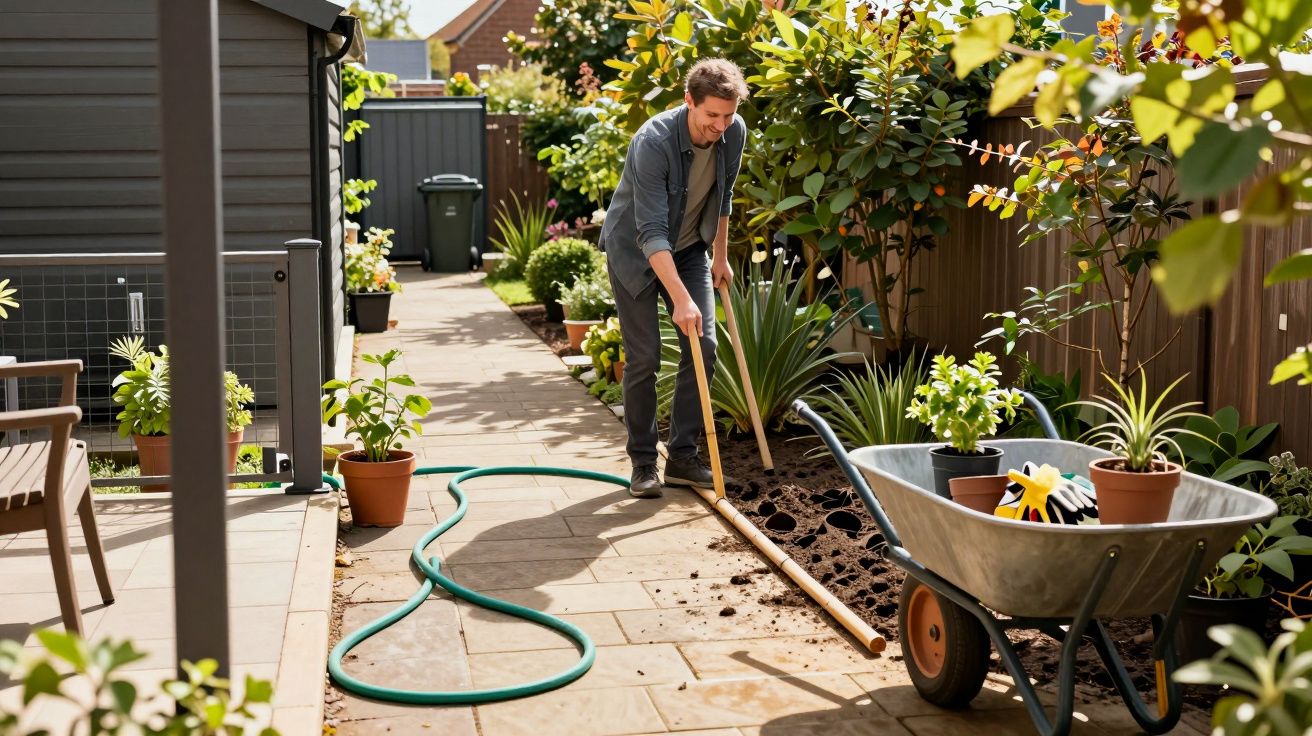
You know that little rush when you come home with a boot-full of plants and a head full of “it’ll be lovely”? Then you step into the garden and realise the garden layout you thought you had is mostly a thin strip, a tight corner, and a path that suddenly feels too narrow. Landscape design isn’t just for show homes; it’s how you stop your space turning into a crowded puzzle you can’t comfortably walk through.
Most planting mistakes aren’t about “wrong plants”. They’re about choosing plants before you’ve noticed the one limitation that decides everything: usable space. Not the square metres on paper, but the space that still works once you’ve accounted for access, light, maintenance, and growth.
The space limitation gardeners spot early (and everyone else learns the hard way)
It’s the functional footprint of the garden: the area left after you subtract the things you can’t ignore.
A bed might look generous until you include the wheelie bin route, the gate swing, the washing line arc, the shed door, the step down from the patio, and the fact that you need somewhere to stand while deadheading. Suddenly the “blank canvas” is a series of narrow, awkward leftovers. If you pick plants first, you’ll spend the next three seasons pruning, moving, and apologising to your knees.
The good news is that noticing this isn’t a grand redesign. It’s a quick reality check that changes the order of decisions: space first, plants second.
Why “available space” is never the space you actually have
Gardens have hidden boundaries. They’re not fences; they’re behaviours.
You need width to pass, turn, carry, and stop. You need a buffer so plants don’t slap you in the face in July. You need a margin for things that spread, self-seed, or simply get floppy after rain. And you need pockets of space where you can do the boring jobs without stepping on your own work.
A classic example is the path that’s “fine” in winter, then becomes a tunnel in summer. That’s not you misjudging the plant. That’s you forgetting that your garden layout has a seasonal version of itself, and July always wins.
The common pinch points that steal space quietly
- Access lines: the straightest route from back door to bins, shed, or side gate. People will take it even if you don’t pave it.
- Door and gate swings: you can’t plant into a moving arc and expect it to survive.
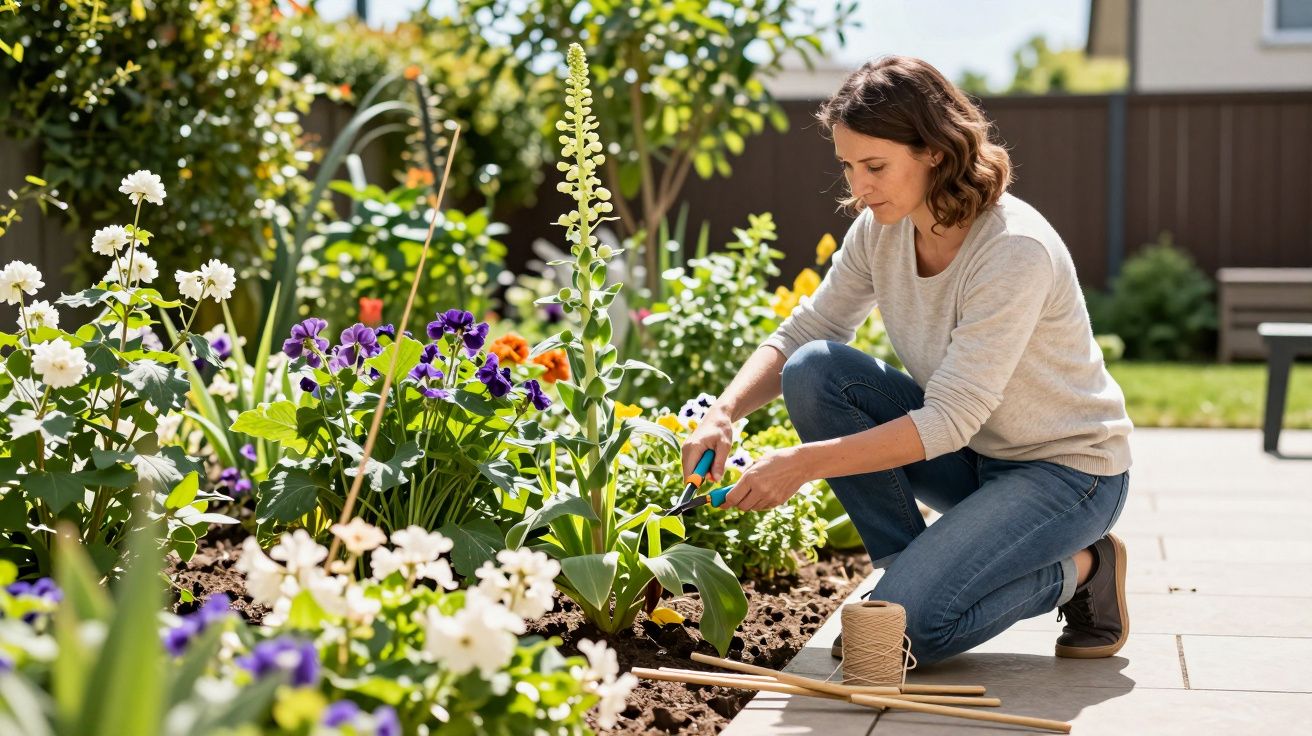
- Working room: where you kneel, reach, and stand while pruning, weeding, potting, or watering.
- Overhang and flop: plants that lean into paths, lawns, and seating after a wet week.
- Future thickness: the mature width of shrubs and climbers, not the size in the pot.
If you account for these, you’re not being fussy. You’re preventing the garden from becoming physically annoying to use.
The quick “walk it” test that makes the problem obvious
Do this before you buy anything else.
Walk your garden as if you’re carrying a laundry basket. Then do it as if you’re dragging a hose. Then do it as if you’re pushing a mower or wheelbarrow. You’ll immediately feel where you hesitate, squeeze, or turn sideways.
Those are your constraints. Mark them.
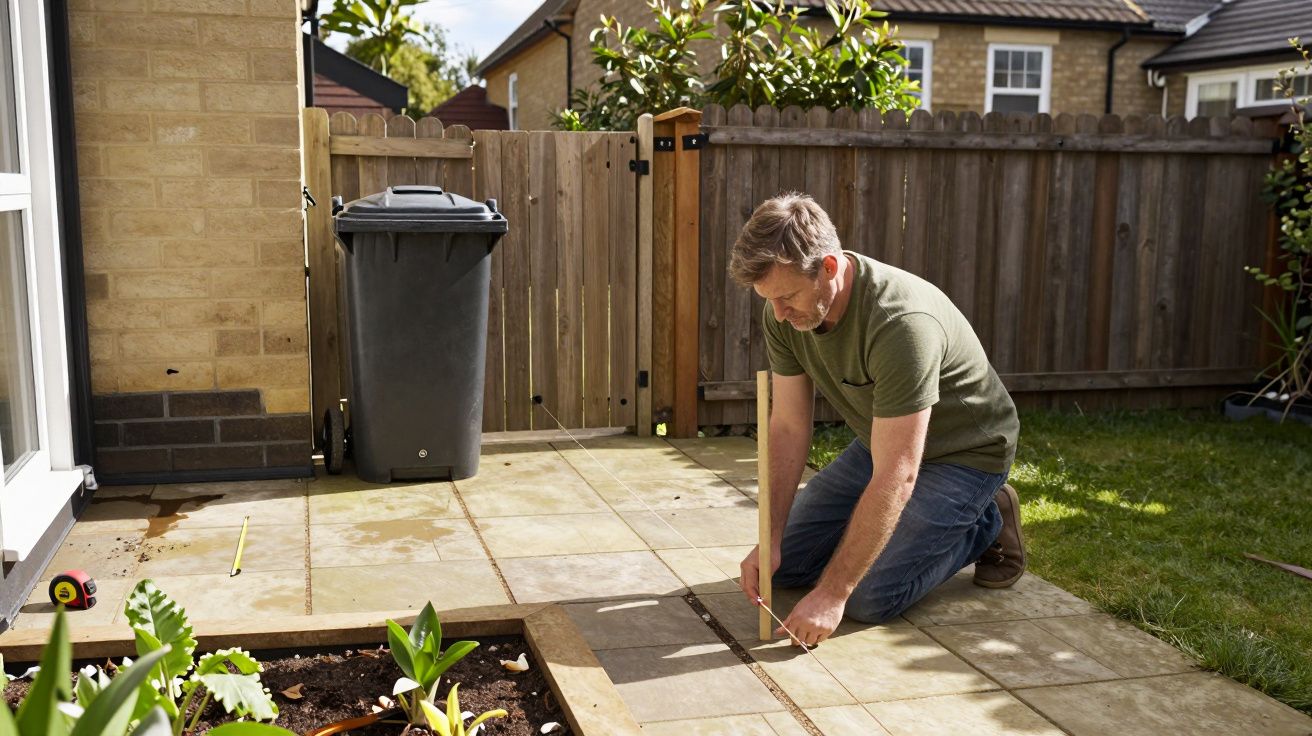
A low-tech way is to lay a hosepipe, string line, or even a run of bamboo canes to show the real routes and edges. The point isn’t accuracy down to the centimetre; it’s honesty about how you move through the space.
A simple rule that keeps things comfortable
If a route is meant to be used often, plan it so that two people can pass without one stepping into a border.
In many UK gardens, that means a main path that’s roughly 90–120cm wide in practice (not just on the plan), plus a little breathing room for plants that will encroach. For tiny gardens, you can cheat narrower in places, but do it intentionally-like a pinch point-rather than by accident everywhere.
How this changes what you plant (without killing the fun)
Once you’ve seen your functional footprint, plant choice becomes calmer and more logical. You stop trying to “fit everything” and start choosing shapes that suit the space you actually use.
In tight gardens, the winners are often:
- Vertical growers (trained climbers, narrow trees, pleached screens) where height is available but width isn’t.
- Plants with good manners (clump-formers over runners; shrubs that stay within bounds).
- Layering that respects access: low plants at the edge, bulk further back, with deliberate gaps to step into for maintenance.
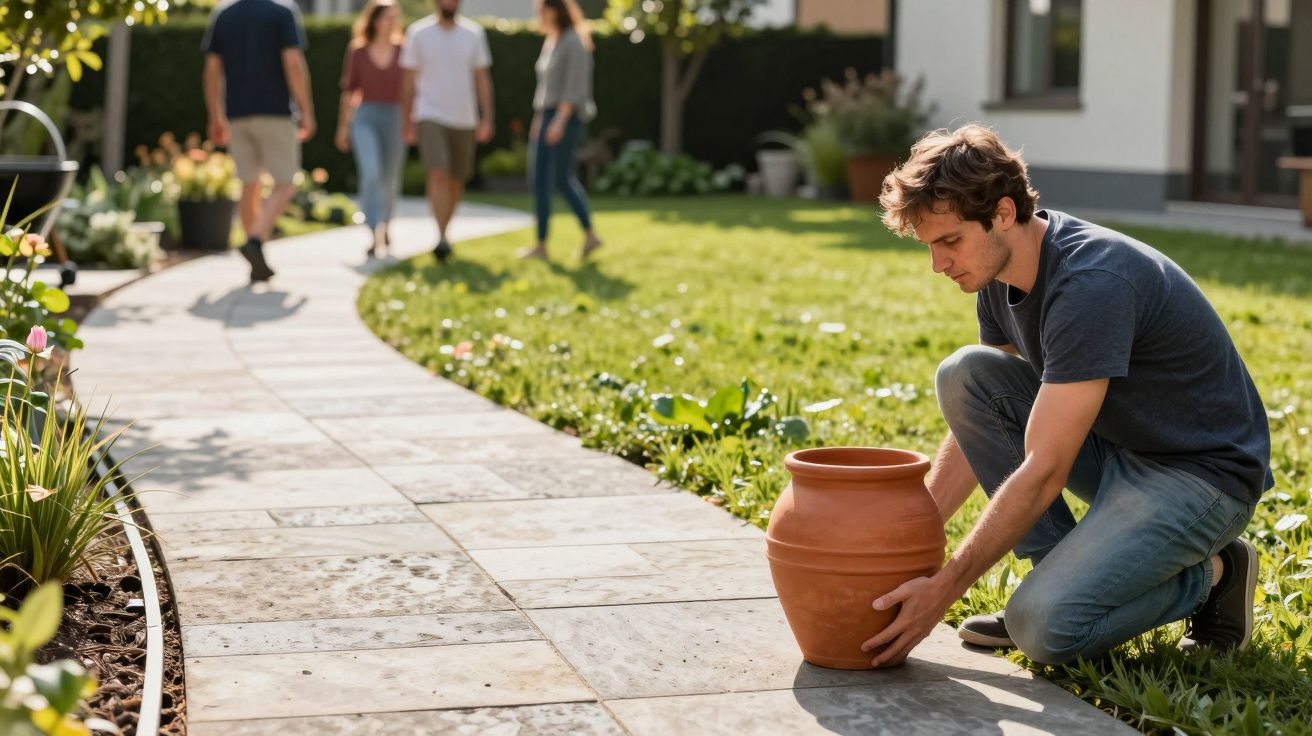
- Containers used as movable volume, not permanent obstacles.
And sometimes the best choice is not a plant at all, but a decision: “This corner is for storage access; I’ll plant around it, not on top of it.”
The trap: designing for how it looks, not how it’s lived in
It’s easy to plan a garden as a picture. It’s harder-and more useful-to plan it as a routine.
Where do you sit with a cup of tea? Where does the sun land at 5pm? Where do you hang washing, park the bike, store the recycling, or let the dog out? Landscape design works when it supports those habits, because you’ll keep using the garden rather than fighting it.
If you ignore that, the garden may photograph well for a month. Then it starts demanding work in the exact places you need clear.
A “small ritual, big difference” planning order
- Mark routes and working zones (bins, gate, shed, taps, seating, washing line).
- Set hard edges (path widths, patio, turning space, door swings).
- Decide the big shapes (screens, trees, hedge lines, focal points).
- Then choose plants that fit the remaining, realistic planting pockets.
That’s the order experienced gardeners follow without always realising it. It’s not less creative; it’s what makes creativity stick.
A tiny checklist you can do in one afternoon
Stand in the garden and note:
- Where you naturally walk (even if there’s no path)
- Where you need to stand still (watering, pruning, barbecuing, opening the shed)
- Which areas get crushed, scorched, or waterlogged
- What you can’t change (drains, inspection covers, neighbour shade, slopes)
- The mature width of any plant you already own and plan to keep
Once you’ve done that, you’ll feel the space limitation clearly: the garden has a smaller “usable core” than you assumed. That’s not depressing. It’s clarity.
And with clarity, you stop buying plants on hope and start choosing them for a garden layout that works in real life-July, November, muddy boots and all.


Comments (0)
No comments yet. Be the first to comment!
Leave a Comment