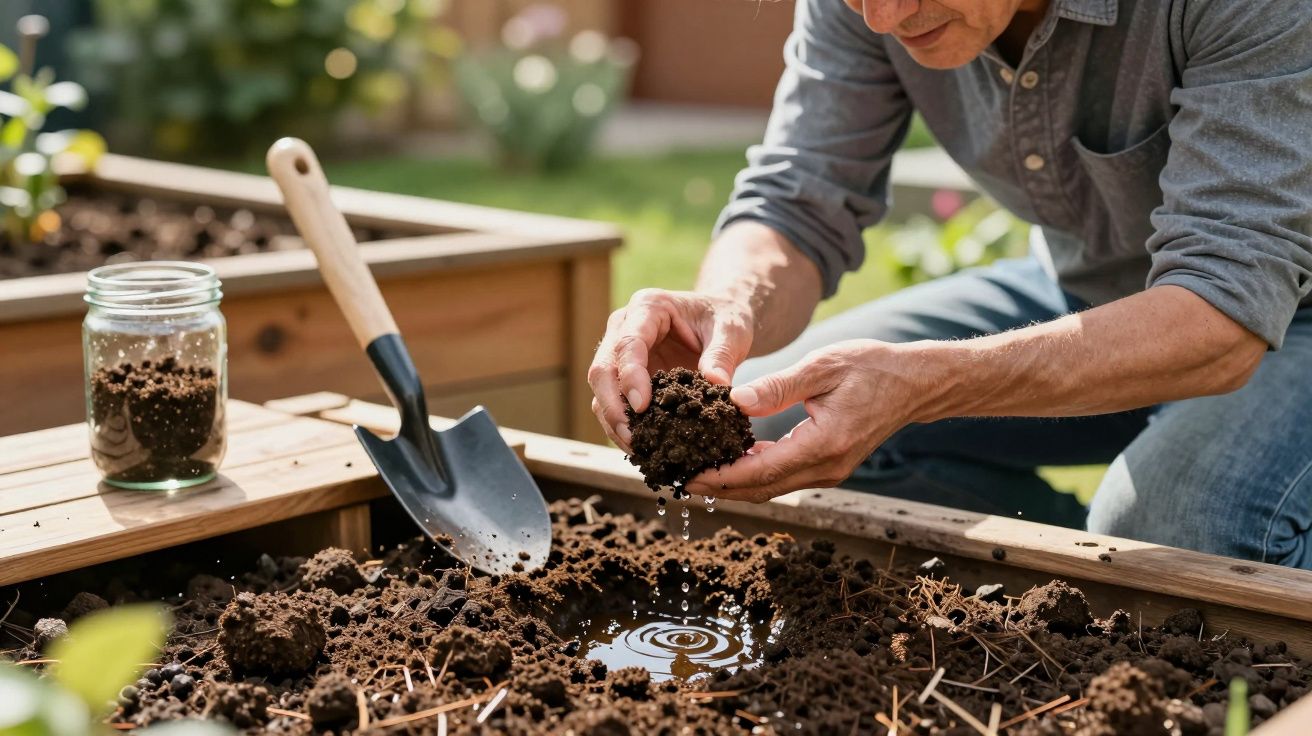
Soil tells on you early, if you know what to look for. I’ve had planting services turn up, spades ready, only for the job to pause because the ground “felt wrong” before a single plant had the chance to sulk. It matters because this is the quiet stage where you can fix a problem fast, cheaply, and without watching a whole border struggle for weeks.
Most plant issues show up above ground when it’s already a saga: yellowing leaves, stunted growth, flowers that never arrive. A soil issue shows up in your hands first, in the way it crumbles, clings, smells, or refuses to drain. The good gardeners notice it on the walk to the shed.
The giveaway gardeners spot: soil that won’t take water properly
The earliest red flag isn’t a sad plant. It’s water doing something odd.
Sometimes you water and it beads on the surface like the bed has turned into a waxed table. Other times it disappears instantly, leaving a pale crust and the feeling you’ve watered air. Both can happen in the same garden, and both are signals that the soil structure is off-either compacted and starved of pore space, or hydrophobic and reluctant to re-wet.
You’ll see it in small moments: a puddle that hangs around hours after a shower, or a pot that stays heavy and cold for days. You’ll also see it in the way the surface sets hard, then cracks, like it’s trying to become a paving slab.
Why “watering problems” are usually structure problems
Plants can be perfectly healthy and still fail in bad conditions because roots live in a balance of water, air, and contact with particles. When soil pores are squeezed shut (compaction), water can’t move down and oxygen can’t move in. When soil becomes hydrophobic (often after drying out, especially in peaty or very organic mixes), water runs through channels or skates off the top, leaving roots dry in the middle of “wet”.
That’s why experienced gardeners do the unglamorous checks before they buy more feed or blame the weather. Structure sits underneath everything: nutrition, drainage, root growth, and how resilient your garden feels in a heatwave.
A quick test you can do in five minutes
You don’t need lab kit. You need a trowel, a jar, and your attention.
The hand-and-trowel check
Dig a small plug about 10–15cm deep.
- If it lifts out in a dense, smooth-sided “brick” and you can’t crumble it without force, you’re looking at compaction.
- If it’s bone-dry inside while the top looks damp, you may have water repellency or channel watering.
- If it smells sour, stagnant, or “drain-like”, that’s often anaerobic soil-too wet for too long.
Now poke the sides of the hole. Shiny, smeared walls are another compaction clue: the soil has been pressed and polished by tools, boots, or repeated rain on bare ground.
The jam-jar settle test (for curiosity and context)
Half-fill a jar with soil, add water, shake hard, and leave it.
In an hour you’ll see heavier particles settle; by the next day you’ll see layers. It won’t “diagnose” everything, but it helps you understand if you’re working with lots of clay (slow drainage), lots of sand (fast drainage), or a mix that needs organic matter to behave.
The common causes (and the ones people miss)
Most soil issues start as one of three boring things:
- Foot traffic and machinery: repeated walking over the same strip, wheelbarrows, mowers, even kids’ goalmouths.
- Bare soil plus heavy rain: surface sealing and crusting after downpours.
- Drying out too far: compost and organic-rich beds can become water-repellent once they bake.
The missed ones are sneaky. Over-tilling can break aggregates into dust, which then compacts. And “improving” with the wrong material-like adding a little sand to heavy clay-can create a cement-like texture that drains worse than before.
The fixes that actually change what happens next time it rains
The goal isn’t perfect fluffiness. It’s a soil that accepts water, holds enough of it, and still breathes.
For compacted soil
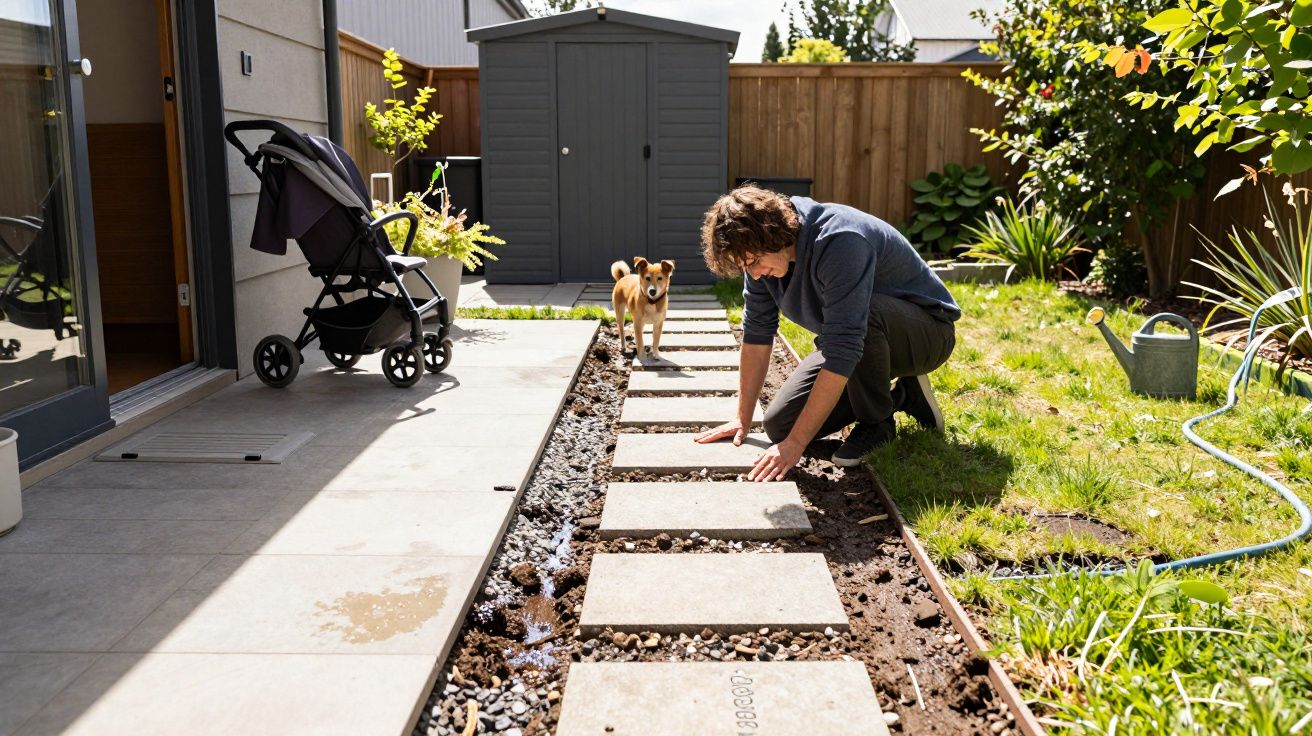
- Stop compressing it: create stepping stones or clear paths, and keep off beds when they’re wet.
- Lift, don’t churn: a garden fork (or broadfork) used to gently loosen can open air channels without destroying structure.
- Add organic matter on top: compost, leaf mould, well-rotted manure. Let worms and weather pull it in over time.
If you’re short on time or the area is big, this is where planting services can help because they tend to work systematically: they’ll improve the bed, plan access routes, and avoid re-compacting the very soil they’ve just opened.
For hydrophobic, hard-to-wet soil
- Pre-wet slowly: a gentle trickle beats a blast. Think long soak, not quick splash.
- Use a wetting agent sparingly (pots especially): it’s not magic, but it can break the initial resistance.
- Mulch to stop the bake: 5–7cm of organic mulch keeps moisture cycling instead of swinging between flood and drought.
And if you’ve ever watered, watched it run off, and felt irrationally angry at the ground-this is why. The soil isn’t being dramatic. It’s doing physics.
The “good” version of this feeling: what healthy soil looks like up close
When soil is in decent shape, it behaves in a way that feels almost polite.
It darkens evenly when watered instead of forming wet patches and dry islands. It breaks into crumbs rather than plates. You’ll see fine roots exploring, not circling in panic near the surface, and you’ll notice that the bed smells earthy rather than sharp or sour.
A simple way to remember it: healthy soil holds together lightly, then falls apart with a small squeeze. It doesn’t need you to win an arm wrestle.
When to call it and bring in help
If you’ve improved for a season and you’re still getting puddling, crusting, and poor root growth, it may be a deeper issue: subsoil compaction, a high water table, or drainage that needs redesign rather than patching. That’s often beyond “add compost and hope”.
A good professional will talk about access, levels, where water goes after rain, and what you want the bed to do. The best ones will also tell you what not to do next-because half of soil care is simply not undoing yesterday’s work.
A small checklist for your next look
- Does water soak in evenly, or pool and run off?
- Does the bed crust hard after rain?
- Can you crumble a handful without it turning to dust or clods?
- Does it smell fresh, not sour?
- Are there worms and fine roots where you expect them?
Notice these early and your plants won’t have to “react” at all. They’ll just get on with it, which is the most convincing sign you’ve fixed the right thing.




Comments (0)
No comments yet. Be the first to comment!
Leave a Comment