You don’t notice soil properly until you’re about to use it. It’s the week when seed packets appear on the kitchen counter, and you start weighing up whether to do it yourself or book planting services to “just get it done”. Either way, the success of what you plant this year is decided by one quiet condition under your feet: whether the soil is still alive enough to take in water and air.
It’s rarely dramatic. No alarms, no obvious “bad smell” moment. Just a spade that won’t go in, a puddle that won’t drain, or compost that sits on top like a hat.
The soil condition gardeners clock first: it stops drinking
Before planting begins, most experienced gardeners look for one thing: does the soil absorb water, or does it repel it? If rain or a watering can leaves shiny beads on the surface, or water runs sideways into the path, you’re dealing with soil that’s sealed, compacted, or hydrophobic (often after a dry spell).
It feels like the ground has turned a bit stubborn. You can throw good compost at it and still get poor starts, because roots don’t care how “rich” it is if they can’t move through it.
There’s a simple reason this matters so much early in the season: young roots need both moisture and oxygen. Soil that won’t “drink” tends to starve them of one or the other - either it’s waterlogged and airless, or it’s so dry and crusted that water can’t get down to where it needs to go.
What it looks like in real gardens (and why it catches people out)
This condition shows up in ordinary places, not just neglected plots. A lawn that’s been walked on all winter. Borders where you’ve topped up with bagged compost for years but never loosened underneath. A new-build garden where the top looks fine, but there’s compacted subsoil below like a lid.
A few common scenes:
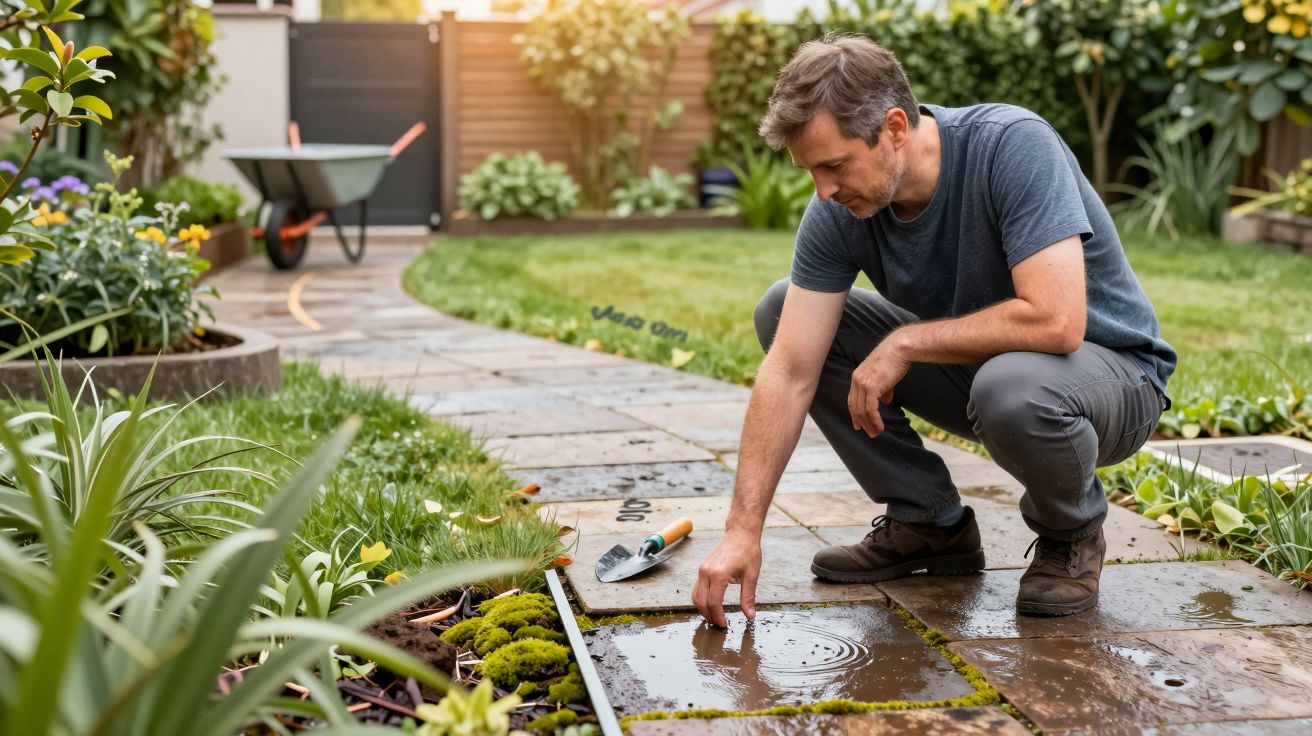
- Puddles that linger on beds long after the rain stops, even when the rest of the garden looks dry.
- A pale crust on the surface that cracks, then sheds water like wax.
- Plants that sulk even when you “water regularly” - because the water is travelling around the root zone, not into it.
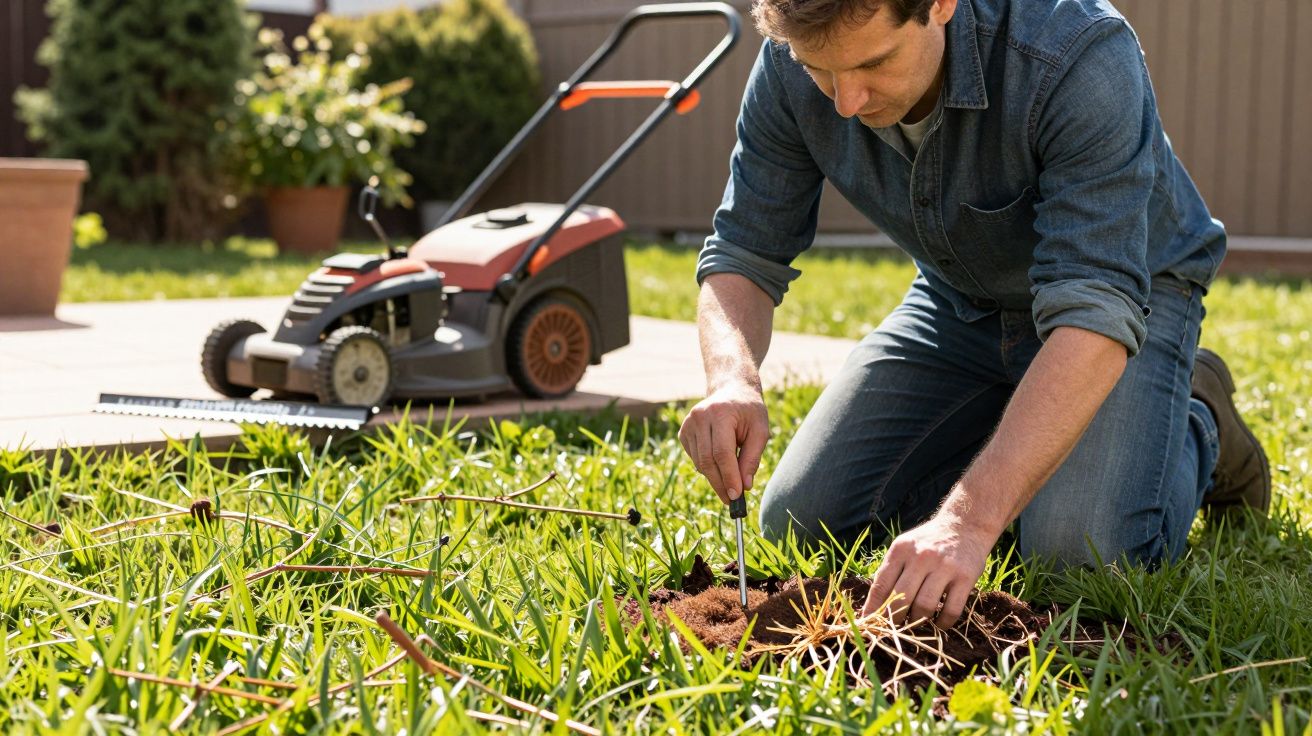
- A spade test that feels wrong: you hit resistance a few centimetres down, then the soil comes up in slabs.
If you’re using planting services, this is exactly the sort of thing that separates a quick tidy-and-plant visit from a job that actually lasts. A good team will check infiltration and compaction before they start digging holes for expensive shrubs.
A 60‑second test you can do before you buy anything
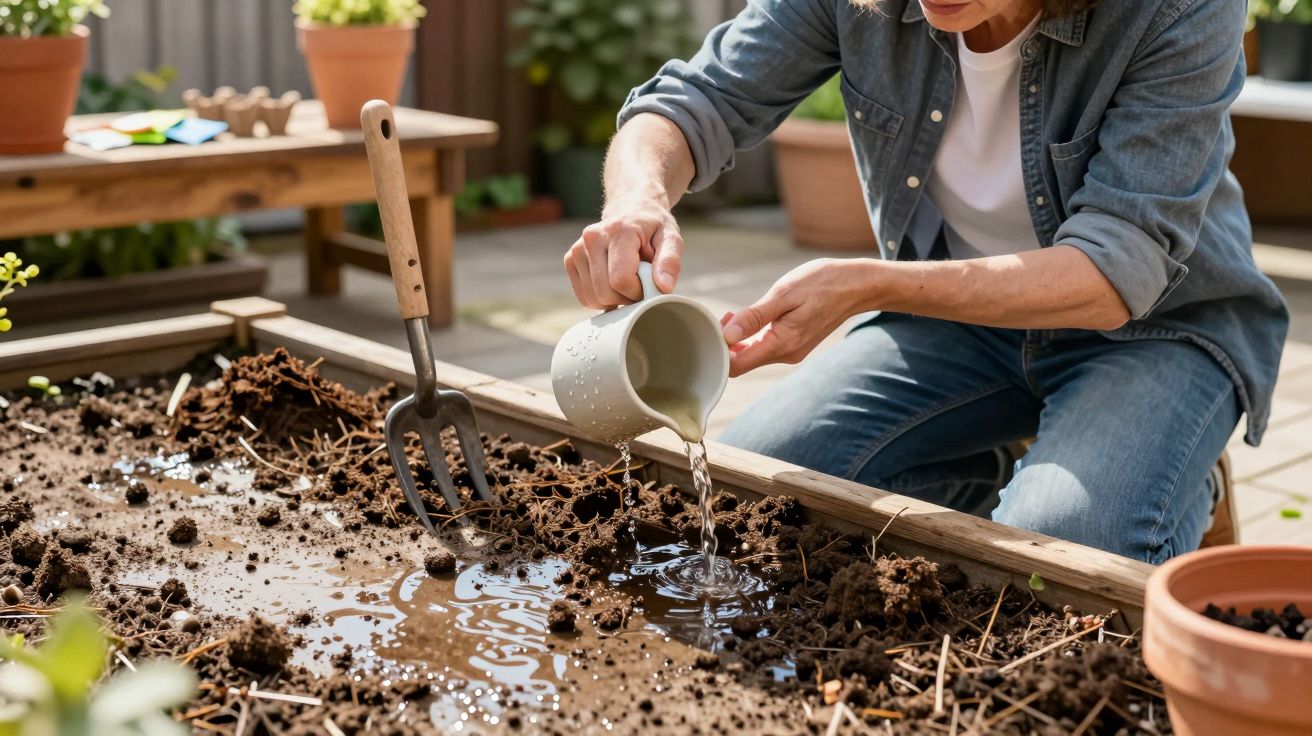
You don’t need a gadget. You need a mug of water and the nerve to look closely.
Pick two spots: one where you’ll plant, and one “control” area that’s usually healthier (near a hedge, or an older border). Slowly pour half a mug of water onto bare soil in each spot and watch what happens for a minute.
You’re looking for these signals:
- Good: water darkens the surface and disappears steadily.
- Concerning: water beads, sits shiny, or runs off in thin streams.
- Bad: water pools and stays, or vanishes only down cracks while the rest stays pale and dry.
If it’s patchy - one spot drinks, one spot refuses - that’s still useful. It tells you where the soil structure has broken down, not that your whole garden is a write-off.
Why soil stops absorbing water (the unglamorous reasons)
Most of the time it’s one of three things, often layered together.
First: compaction. Foot traffic, wheelbarrows, heavy rain on bare ground, and years of “treading in” plants pack the pore spaces shut. Water can’t get in because there’s nowhere for it to go.
Second: organic matter sitting on top rather than through. You can add compost every year and still end up with a spongy surface over a dense layer beneath. Roots stall at the boundary, and so does water.
Third: dryness that flips the surface water-repellent. After a hot, dry period, some soils develop a hydrophobic skin. It’s not you imagining it; water really does behave differently, especially on lighter, sandy beds and peat-free mixes that have dried out hard.
How to fix it without turning the garden into a building site
The goal isn’t to “dig everything over” like it’s 1973. The goal is to reopen pathways for air and water, then keep them open.
Try this, in order of least drama:
- Rough up the surface, gently. Use a fork to loosen 10–15cm deep, rocking it back slightly without flipping layers. Do it across the bed like aerating.
- Water slowly, twice. First a light watering to break the surface tension, then a deeper one 10–15 minutes later. A hose on a trickle beats a heroic flood.
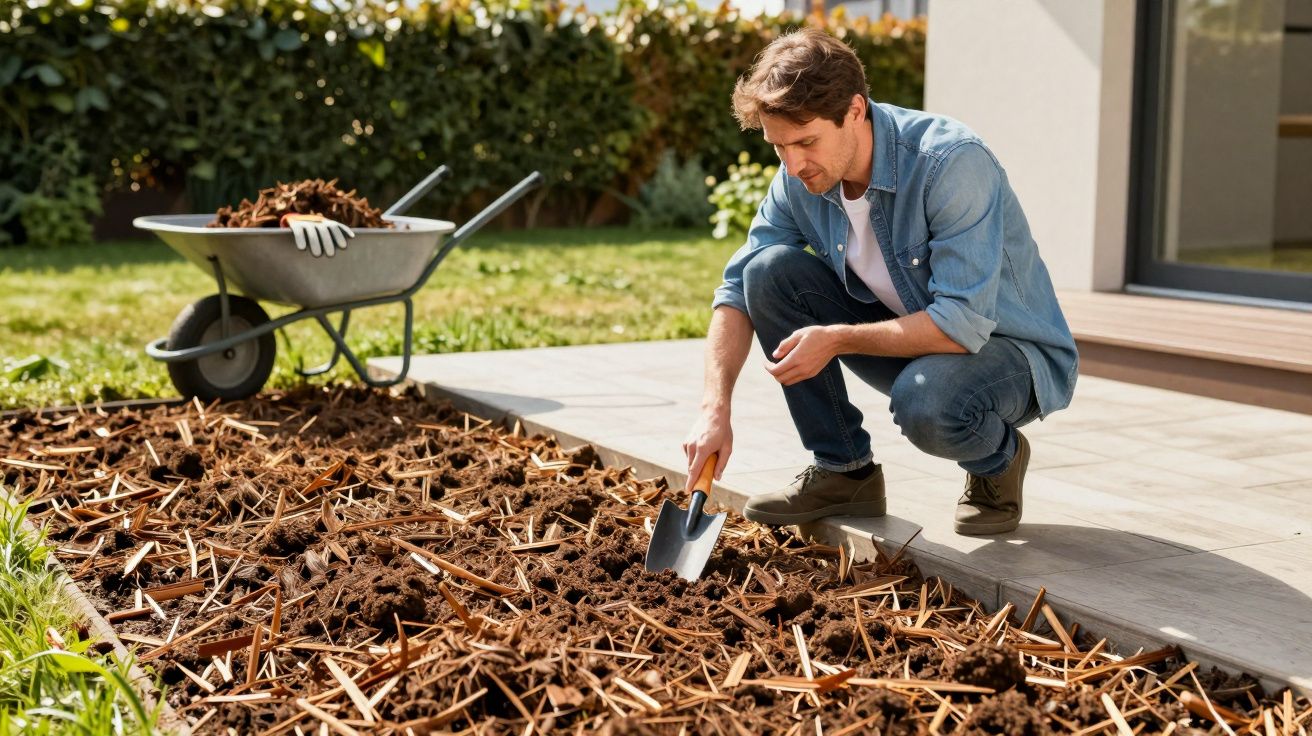
- Top-dress with compost, then mulch. Compost feeds structure; mulch protects it. A 3–5cm layer is usually enough.
- Keep the surface covered. Bare soil seals and crusts. Mulch, groundcover, or even a temporary sowing (like phacelia) helps.
If the soil is very compacted (you can’t push a fork in, or it comes up in plates), that’s when it can be worth calling planting services for a “prep-first” visit. Paying for planting into bad ground is the expensive version of optimism.
The small habit that stops the problem coming back
Most gardens don’t fail because people don’t care. They fail because soil gets treated like a static medium: something you add plants to, rather than something you manage.
One habit makes an outsized difference: stop walking on beds, even “just for a minute”. Add stepping stones, work from boards, or widen paths by 10cm so you’re not constantly compressing the planting area.
And if you only do one seasonal job: mulch after the last big tidy. It’s not just for weeds. It’s a rain jacket for your soil structure.
“Healthy soil isn’t neat. It’s crumbly, busy, and a bit forgiving.”
A quick cheat sheet before planting day
- If water runs off: suspect hydrophobic surface or compaction; start with gentle forking and slow watering.
- If water sits: suspect compaction or poor drainage; avoid planting deep-rooters until structure improves.
- If soil forms hard slabs: stop digging holes and start addressing the layer beneath.
- If you’re bringing in planting services: ask if they’ll do an infiltration check and basic soil prep before planting.
| What you notice | What it often means | What to do next |
|---|---|---|
| Water beads or runs sideways | Hydrophobic crust, dry soil, fine surface | Roughen, water slowly twice, mulch |
| Puddles linger on beds | Compaction, blocked pore spaces | Fork-aerate, add compost, avoid treading |
| Spade hits a “lid” below | Layering/top over hard pan | Deep fork in zones, consider pro prep |
FAQ:
- Is this just “bad soil”, or can it be fixed quickly? Often it’s a structure issue rather than fertility. Gentle loosening, slow watering, and mulching can improve absorption within days, with bigger gains over a season.
- Should I add sand to help drainage? Usually no. Sand mixed into clay poorly can make it worse. Compost and organic matter are safer for improving structure.
- Can I still plant if my soil isn’t absorbing water well? You can, but results are patchy. If you must plant, improve a planting zone first (fork, compost, mulch) rather than digging holes into unchanged ground.
- Do planting services typically test soil, or just plant? It varies. Ask directly whether they check compaction/infiltration and whether soil prep is included or billed separately.
- What’s the fastest sign my soil is improving? Water starts to soak in evenly, the surface stays darker for longer after watering, and the soil breaks into crumbs rather than slabs when you lift it.



Comments (0)
No comments yet. Be the first to comment!
Leave a Comment