
Most homeowners picture site clearance as a quick skim: a couple of trips to the tip, a light rake, and suddenly the space is “ready”. Then garden refurbishment starts and the gardener arrives with a notebook, pegs, spray paint, and an unsettling interest in what’s under your lawn. That mismatch is where timelines slip, costs creep, and perfectly salvageable plants get binned.
Gardeners don’t treat clearance as tidying. They treat it as risk control and groundwork, because every hidden root, buried slab, and “temporary” cable becomes someone’s problem once the new garden goes in.
Why “clearing” means something different to a gardener
Owners often define the job by what they can see: brambles, rubble, old pots, that scruffy shed. A gardener is looking for what will reappear after you’ve spent money-regrowth, drainage issues, and anything that will compromise a new surface or planting scheme.
You might want the garden to look empty. They want it to be stable, clean, and predictable. Those are not the same outcome.
Good site clearance isn’t about making space. It’s about removing surprises.
The hidden list they’re mentally running
- What’s invasive or persistent (bramble crowns, bindweed, horsetail, bamboo rhizomes).
- What’s structurally in the way (concrete haunching, postcrete, buried edging, old footings).
- What’s contaminated (pet-soiled soil, oil stains, builder’s waste, asbestos risk in old sheets).
- What’s going to sink later (soft spots, poorly compacted fill, pockets of mulch over rubble).
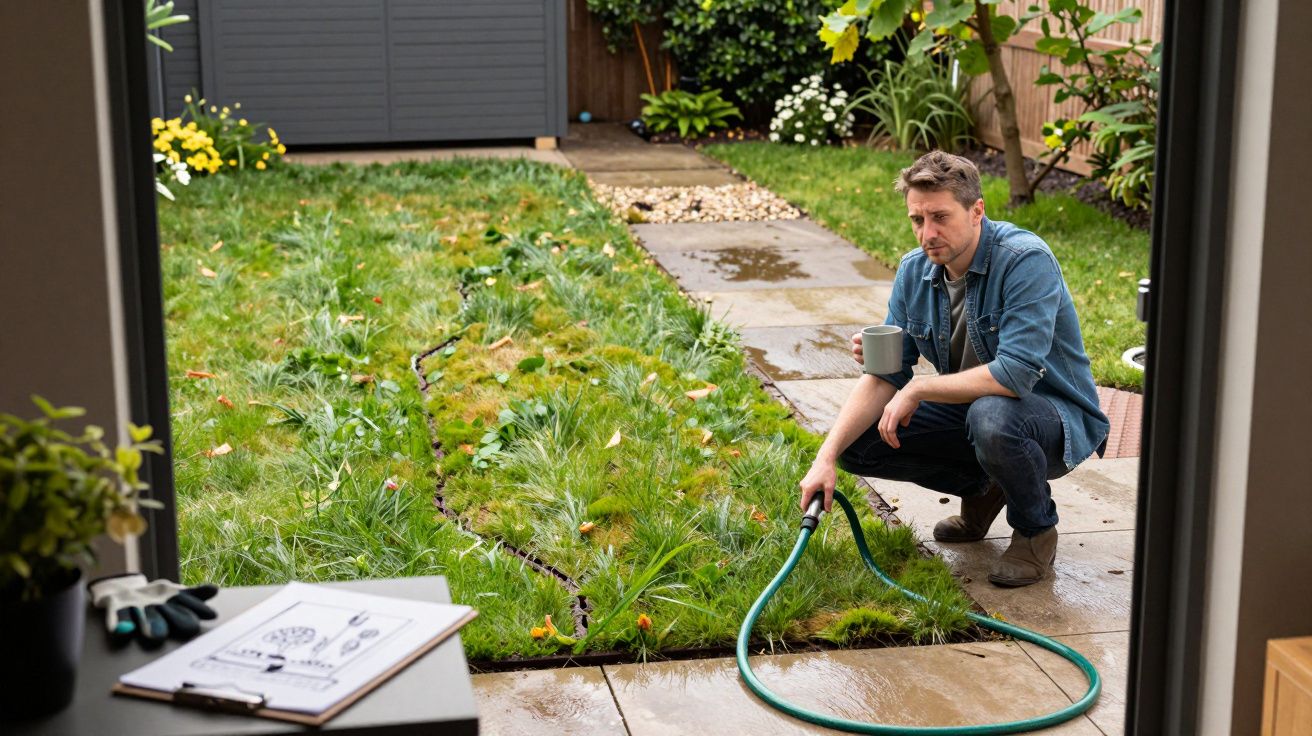
- Where water currently goes (low points, blocked gullies, broken drains, compacted clay).
That’s why a gardener can seem “fussy” in the early stage. They’re pricing the unknown out of the job.
The two clearance goals: visual vs functional
A common owner expectation is a neat, bare patch ready for paving or planting. A gardener’s target is different: a base that won’t move, rot, clog, or regrow through your new work.
Here’s the simplest way to frame it.
| Owner’s idea of done | Gardener’s idea of done | Why it matters |
|---|---|---|
| Looks empty | Roots, rubble, and risks removed | Stops regrowth and rework |
| Top layer taken off | Correct depth and disposal method | Prevents sinkage and contamination |
| “We’ll sort drainage later” | Water routes confirmed early | Avoids lifting new patios |
What gardeners remove first (and why it can look backwards)
Owners often start by stripping plants they dislike. Gardeners usually start with access, safety, and boundaries-because machines, barrows, and waste removal need a clear route. They’re also trying to protect anything worth keeping before the chaos begins.
Typical order of operations on a real job
- Mark out keep/remove zones (plants, topsoil, materials to salvage).
- Create a waste route (protect paving, check gate widths, plan skips).
- Lift surface layers (decking, old turf, membranes, loose slabs).
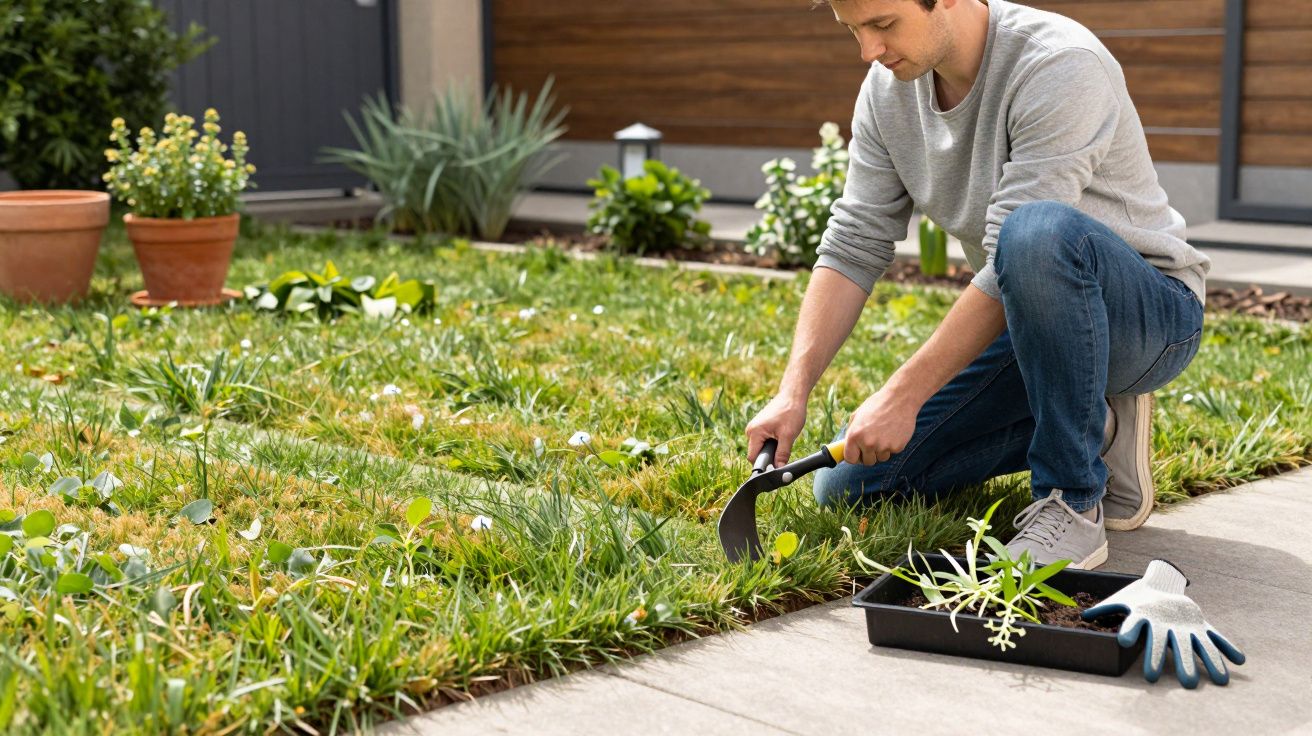
- Deal with roots and regrowth (stump grind, dig out crowns, remove runners).
- Sort spoil properly (topsoil kept separate from rubble and green waste).
That separation step feels pedantic until you try to reuse soil that’s full of brick shards, nails, and plastic. Good garden refurbishment depends on clean inputs.
The regrowth problem owners underestimate
If you cut a bramble down to ground level, it looks solved for a week. If you leave the crown, it’s a schedule for next month. Gardeners clear with the next season in mind, not the next photo.
Bindweed is the classic example. Snap it, and it shrugs. Leave fragments in the soil you plan to spread around new beds, and you’ve effectively planted it everywhere.
A “quick clear” can turn into a future maintenance contract you didn’t ask for.
When clearance needs a different tactic
- Bamboo: not “dig a bit”, but a containment or full rhizome removal plan.
- Horsetail: repeated control and spoil handling, not rotavating (which spreads it).
- Self-seeded trees: remove while small, including roots, before they become stumps.
- Turf over rubble: often needs excavation and rebuild, not fresh topsoil on top.
Soil is part of site clearance, not an afterthought
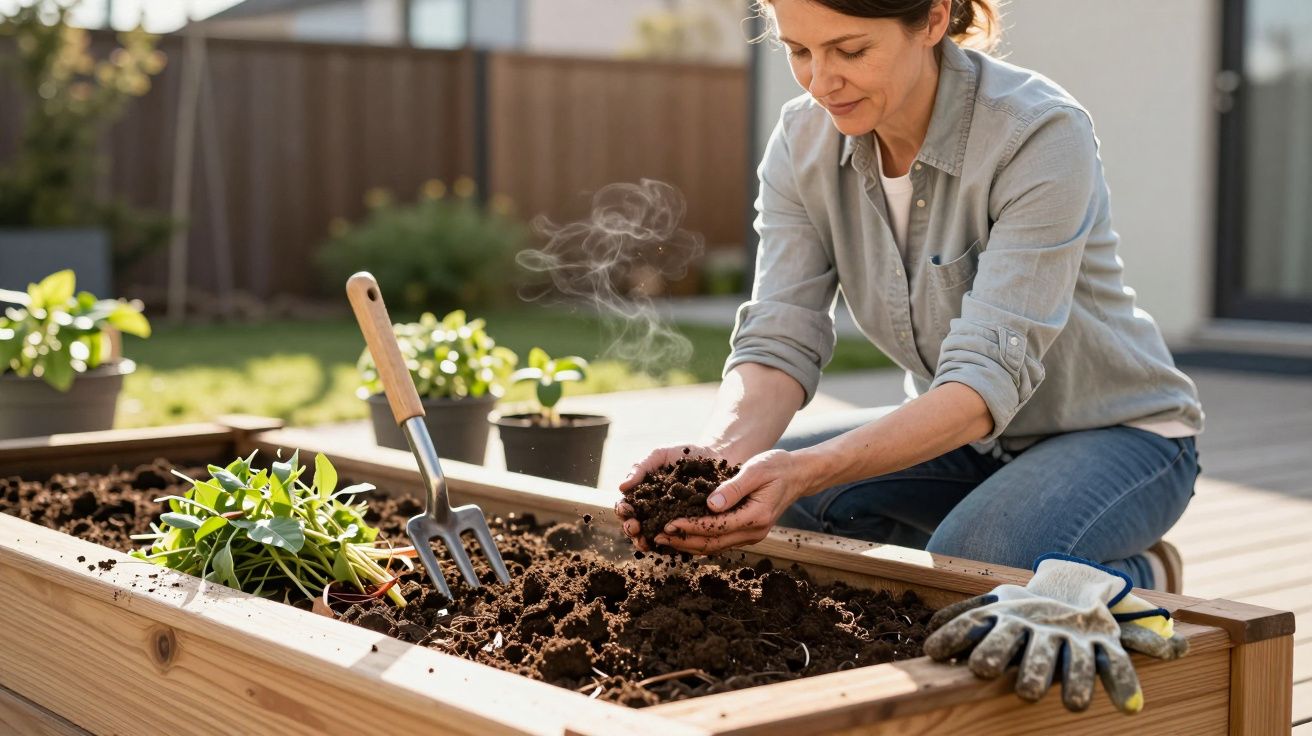
Owners often assume soil is just soil, and new compost will fix it. Gardeners will check texture, compaction, and what’s been buried. They’re deciding whether the existing soil is an asset to protect or a liability to remove.
If you’re laying a patio, the soil conditions determine how deep you excavate and how much sub-base you need. If you’re planting, they determine whether you’ll be fighting waterlogging, drought, or nutrient lock-up.
Quick checks you’ll see a gardener do on arrival
- Push a spade in to feel compaction and depth of decent topsoil.
- Look for water staining and moss that signals poor drainage.
- Scratch for builders’ waste: plaster, mortar, insulation, broken blocks.
- Test where rain sits after a shower, not on a dry sunny day.
Waste isn’t “just a skip”: disposal changes the plan
Site clearance produces mixed waste: green, hardcore, soil, and sometimes hazardous materials. Gardeners care because mixing them can double disposal costs and slow everything down.
Soil is the big shock for many owners. Clean topsoil can sometimes be reused on site. Spoil mixed with rubble becomes expensive to remove and difficult to repurpose. And if there’s any suspicion of asbestos cement (common in old shed roofs or garage panels), the whole approach changes.
If you’re not sure what a material is, don’t smash it up. Identify first, clear second.
What to agree before clearance starts (so the refurb doesn’t drift)
Most clearance disputes aren’t about effort. They’re about definitions. “Clear” can mean “cut down and stack”, or it can mean “remove roots, take away waste, and leave levels ready for build-up”.
A short pre-start conversation avoids a messy mid-job renegotiation.
A practical checklist for homeowners
- What counts as waste removal: stacked on site, bagged, skip, or fully off-site?
- Are roots/stumps included, and to what depth?
- Is topsoil being kept, improved, or removed?
- Will levels be set ready for the next stage (paving, turfing, beds)?
- What access is needed, and what needs protecting (neighbour fences, existing patio)?
- Are there any “keep” items to salvage (slabs, bricks, plants, edging stones)?
The clearance standard that actually helps your new garden
The best site clearance leaves you with a site that behaves: water goes where it should, surfaces have proper build-up space, and plants grow where you want them, not where last year’s roots decided.
It can look slower than an owner expects because it is. But in garden refurbishment, the fastest route to a finished garden is often the most thorough first week-when nobody can yet see the difference, but everyone will feel it later.
FAQ:
- Is site clearance the same as garden waste removal? Not usually. Waste removal is one part; clearance may include lifting surfaces, removing roots, separating spoil, and preparing levels for the next stage.
- Can I clear everything myself to save money? You can, but agree the standard first (depths, roots, disposal). DIY clearance that leaves regrowth or mixed spoil often costs more to fix during the build.
- Do I need to remove all topsoil? No. Many gardens benefit from keeping and improving it, but only if it’s clean and not mixed with rubble or invasive roots.
- What’s the biggest red flag during clearance? Buried building waste and persistent weeds. Both can spread problems across the entire garden if handled casually.



Comments (0)
No comments yet. Be the first to comment!
Leave a Comment