You can tell a lot about a home from the way you walk through it, and garden paths make that truth visible outside. In any garden layout, they decide what you notice first, where you hesitate, and what you avoid-long before you think about planting. They’re relevant because a path isn’t just circulation; it’s a daily instruction your garden repeats back to you.
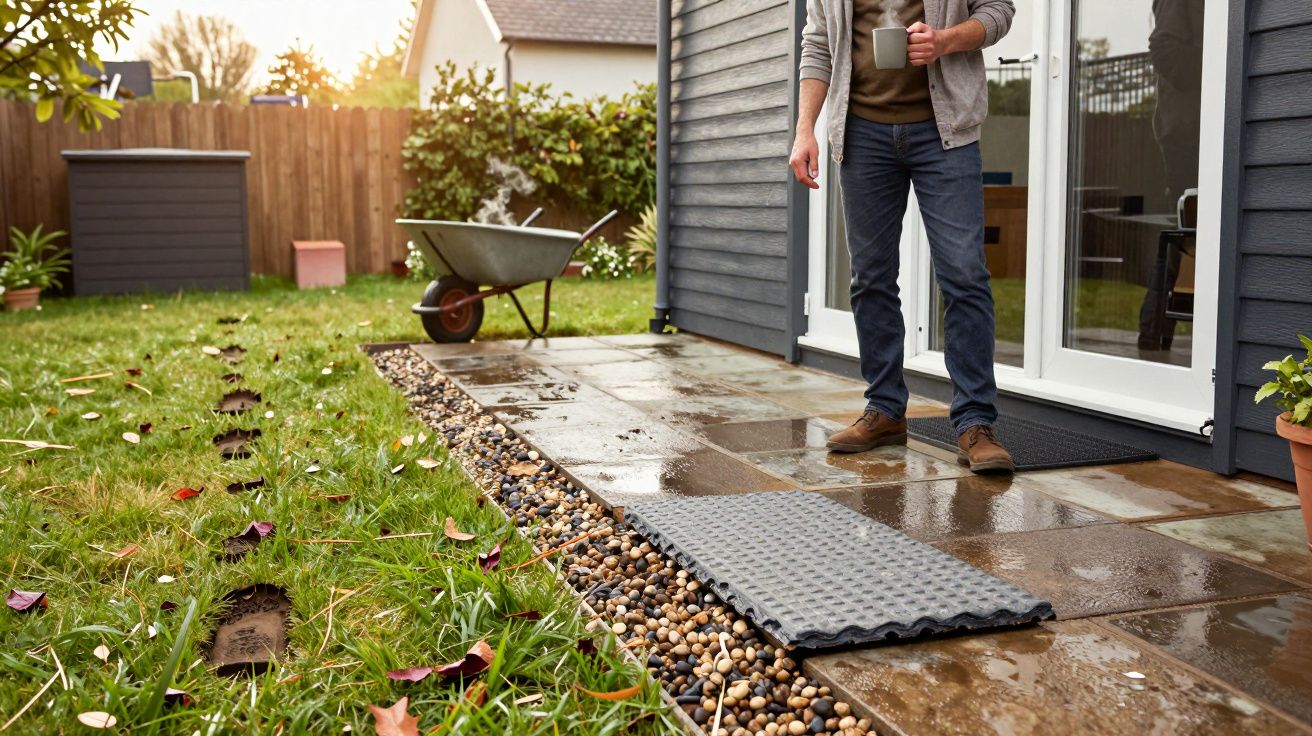
I noticed it the morning after rain, shoes already muddy, trying to carry a mug of tea to the far end of the border without stepping on new shoots. The lawn looked fine from the window, but the route I actually took told a different story: a corner I always cut, a gate I rarely use, and a bit of paving that somehow always stays slick.
A path is honest like that. It records your habits in compacted soil and worn edges, and it quietly points to what your garden has become.
The hidden job: paths translate intention into behaviour
Before a path is pretty, it’s a decision about effort. If reaching the compost means balancing on sleepers, you’ll “do it later” more often, and the heap will swell into a guilty landmark. If the washing line sits beyond a narrow, muddy pinch-point, you’ll stop hanging things out on days when you most need the air.
That’s the part people miss: the path is the system, not the accessory. Garden paths either make good habits easy-or make them negotiable.
Think of the mental maths you do without noticing. You choose the driest line, the widest opening, the route with the fewest gates, the safest footing when it’s dark. Over time, your feet vote. The garden listens.
Read your garden like a map of footprints
A quick way to diagnose a garden layout is to stand at your back door and ask, “Where do I actually go?” Not where you planned to go, or where the stepping stones suggest, but where you end up when you’re late, carrying something, or it’s tipping it down.
Look for these tells:
- Desire lines: a faint diagonal across the grass, a shortcut beside the bed, a scuffed edge where the paving ends.
- Hesitation spots: a narrow corner by bins, a wobble by the shed, a place you always step over rather than through.
- Avoidance zones: areas that grow “wild” not by design, but because access is awkward or unpleasant.
- The dark run: the route you won’t take after dusk, even if it’s technically shorter.
Let’s be honest: no one strolls like a magazine shoot in February. Paths should be designed for real weather, real carrying, real impatience.
Shape matters more than you think
A straight path feels efficient, but it also acts like a corridor: fast in, fast out, eyes forward. A gently curving route slows you down and makes you look sideways-useful when you want the garden to feel larger, or when you want visitors to notice layers rather than endpoints.
Width is a social signal. A single-person strip says “service route” even if it runs past your best planting. A comfortably wide path says “come this way” and changes how you host, how kids play, how often you take a chair outside.
As a rule of thumb:
- Utility routes (bins, shed, greenhouse): prioritise grip, drainage, and carrying space.
- Strolling routes (to a bench, through borders): prioritise pacing, sightlines, and pause points.
- Crossings (between lawn and patio): prioritise durability; they get the most punishment.
If you’ve ever watched someone avoid a path because it feels like a tightrope, you’ve seen a design choice undo months of planting.
Materials aren’t just aesthetics-they’re feedback
Every surface tells your body how to move. Gravel crunches and slows you down; it also announces footsteps, which can make a garden feel inhabited. Smooth stone looks calm but can turn treacherous with algae. Brick has warmth and grip, but the joints invite weeds if you don’t detail them well.
In practice, the “best” material is the one that fits your use, not your mood board. A child running to the trampoline, a wheelbarrow to the compost, an older relative walking with care-each of those is a stress test.
Small upgrades change everything:
- Add a narrow gravel strip at bed edges to stop soil washing onto paving.
- Use fall and drainage deliberately; a path that sheds water stays inviting.
- Build in a passing point near doors or gates so two people don’t do the sideways shuffle.
A garden can be lush and still feel unfriendly if the walking is anxious.
Make paths do double duty: reveal, frame, and pause
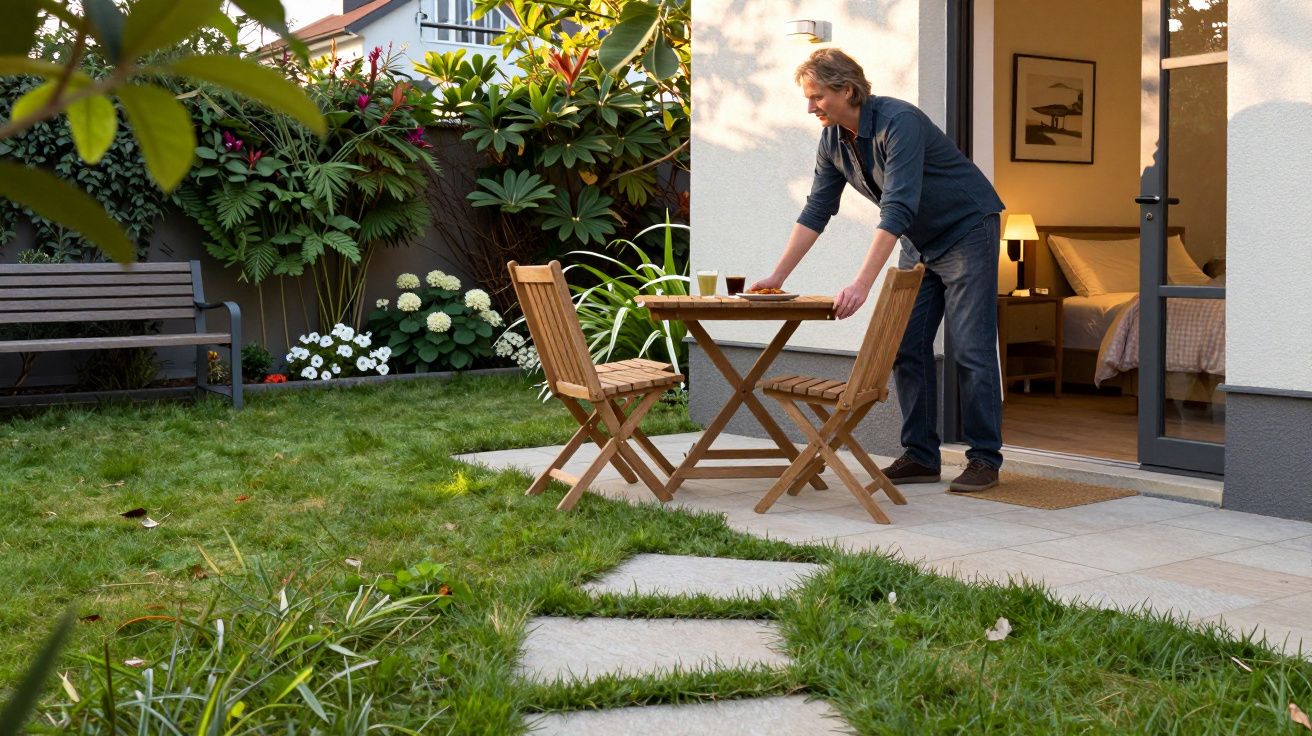
The best paths don’t just lead; they edit. They frame a view, hide a messy corner until the last moment, and give you a reason to stop where the light is good.
Try designing with three beats in mind:
- Arrival: what you see from the house or gate (often improved by a clear, confident line).
- Transition: where you slow down (a curve, a change in texture, a narrower gap).
- Reward: a seat, a pot, a focal plant, even just a clean view of the far boundary.
You don’t need more garden to feel more garden. You need a route that turns space into a sequence.
“A path is a sentence,” a landscape designer once told me. “If you rush it, you miss the meaning.”
A quick path audit you can do this weekend
Walk the garden twice: once as if you’re hosting, once as if you’re doing chores. Do it in daylight, then again at dusk. Notice where you speed up, where you look down, and where you unconsciously change course.
Then fix one friction point you can actually maintain:
- Widen one pinch-point by 200–300 mm.
- Replace one slippery slab or rotate it so the textured face is up.
- Add a step or landing at a gate so you’re not stepping straight into mud.
- Move one stepping stone so your natural stride doesn’t fight it.
The goal isn’t perfection. It’s a path that matches your life closely enough that your garden stops arguing with you.
| What paths reveal | What it usually means | Simple fix |
|---|---|---|
| Worn corner cut across lawn | Route is too long or indirect | Add a spur path or widen the curve |
| Muddy pinch-point near bins | High traffic + poor drainage | Add gravel base, edging, and a landing |
| Avoided back corner | Access feels awkward or unsafe | Improve lighting, widen access, remove a visual barrier |
FAQ:
- Do garden paths need to connect everything? No. Connect what you use often, then add optional routes for wandering. Too many paths can make a garden feel over-managed.
- How wide should a main path be? Wide enough for two people to pass comfortably if it’s a social route; for utility routes, wide enough for what you carry (wheelbarrow, bins) without scraping planting.
- Is gravel a bad choice because it gets everywhere? Not if it’s contained well. Good edging and the right gravel size reduce migration, and the crunch can be a useful “living” signal in the garden.
- Why do my paths look fine but feel wrong? Usually grip, drainage, or width. If you’re looking down while walking, the surface is asking your body to be cautious.
- What’s the most common mistake in garden layout with paths? Designing for a perfect day. Paths should work on wet days, in the dark, and with full hands-because that’s when you notice them most.

Comments (0)
No comments yet. Be the first to comment!
Leave a Comment