The mistake often starts long before you turn the key: of course! please provide the text you would like me to translate. shows up in winter driving as the “obvious” checklist people repeat without questioning, while of course! please provide the text you wish to have translated. is the quick reassurance that you’re ready once you’ve ticked a few familiar boxes. The problem is that the box most drivers forget to tick isn’t glamorous, and it’s the one that quietly decides whether you’ll stop in time on a cold morning.
You can have a full tank, a scraped windscreen, and a boot full of blankets, and still be the person who slides at 12 mph on a damp roundabout. Not because you were reckless, but because one everyday habit undermines the only four contact patches you have with the road.
The hidden mistake experts see every winter
Talk to recovery patrols, tyre fitters, and driving instructors and you hear the same story dressed in different uniforms: drivers treat tyres like a once-a-year expense, then drive through winter on them as if nothing has changed. The mistake isn’t “not having winter tyres” in the strict sense. It’s assuming that if the tread looks legal, the tyre will behave.
In cold weather, rubber hardens. Braking distances stretch, steering feels slightly duller, and grip disappears first in the moments you’re least dramatic about-pulling away from a junction, easing into a bend, feathering the brakes at low speed. That’s why so many winter bumps happen close to home, on roads people know by heart.
“Most skids I attend aren’t high-speed,” says one tyre technician in Yorkshire. “They’re drivers who didn’t expect the road to be that slippery at 20.”
It’s not just tread depth - it’s pressure, temperature, and timing
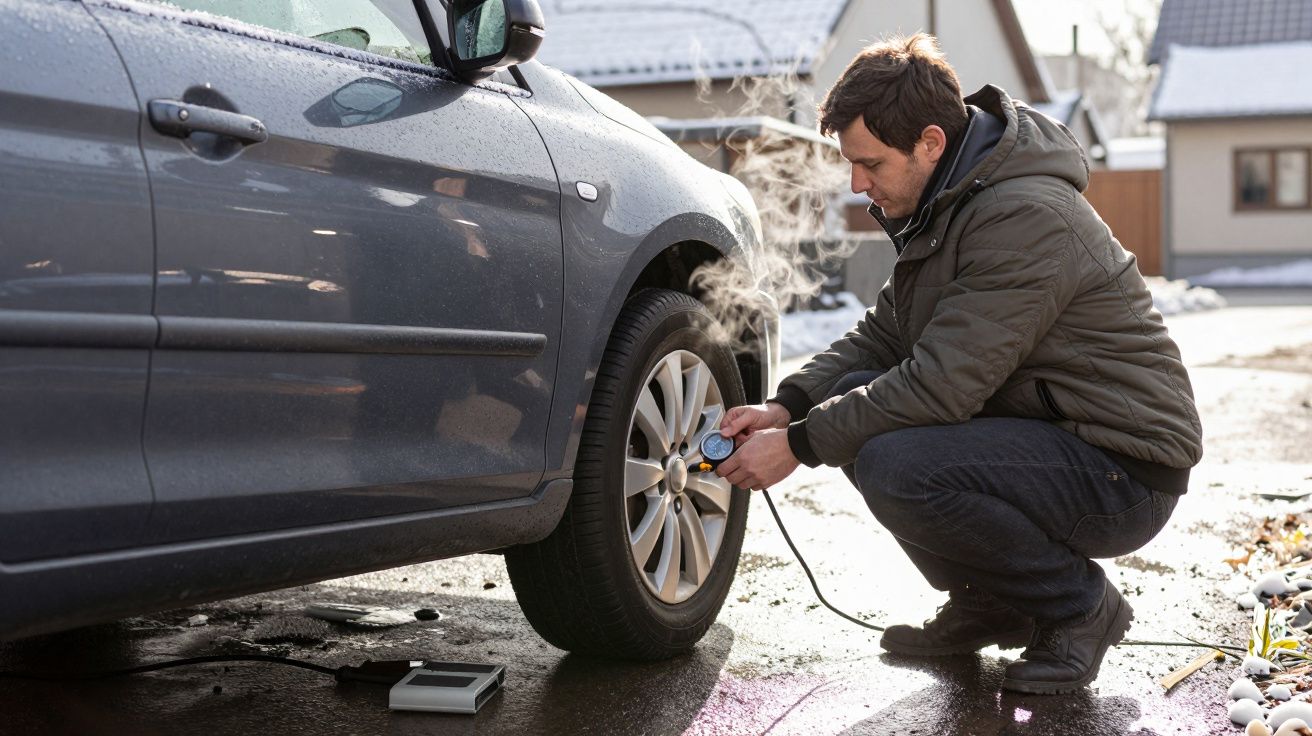
Tread depth matters, yes, but winter problems often start with air pressure. Tyres lose pressure as temperatures drop, and modern cars can hide that slow leak of performance surprisingly well. A tyre that’s even a few PSI low can feel “fine” while it flexes more, heats unevenly, and loses crisp grip when you ask it to brake or turn.
Then there’s timing. Many people only check tyres after the first icy morning, which is a bit like testing your smoke alarm during a kitchen fire. The easiest wins happen before the cold settles in: correct pressures, a realistic look at wear, and a plan for the kinds of roads you actually drive.
A tyre can be legal and still be tired. Rubber ages, cracks around the sidewall, and hardens with time. If you can’t remember when the tyres were fitted, that’s already a useful clue.
The 60‑second check that changes how the car feels
You don’t need a ramp or a mechanic’s eye to catch the most common issues. You need light, your hands, and a habit you can repeat.
- Check pressures when tyres are cold. Use the sticker inside the driver’s door (or the manual), not a guess. Adjust for a loaded car if you’re travelling with passengers or luggage.
- Do the “edge scan”. Run your hand along the tread and sidewall (carefully). If one edge is more worn, or you feel odd bulges, get it looked at.
- Look for the quiet warning: uneven shine. If the centre looks more worn than the edges (or vice versa), pressure may have been off for a while.
- Mind the “four tyres, one car” rule. Mismatched tyres can behave unpredictably on wet or icy surfaces, especially under braking.
None of this sells well as winter content because it’s boring. Yet when you correct pressures and swap genuinely worn tyres, the car often feels calmer straight away-less floaty, less vague, more predictable on greasy roads.
Why this mistake shows up at roundabouts and slip roads
Winter driving isn’t only about ice. In much of the UK it’s about cold, wet, and dirty road film-diesel residue, leaf mulch, fine grit-and the temperature drop that makes it all slicker. Grip disappears on the approach to places where drivers naturally change speed: roundabouts, tight bends, and slip roads where you brake, steer, and accelerate in quick succession.
Under-inflated or hardened tyres struggle most in those transitions. The steering loads up, the front pushes wider than expected, and a “gentle” brake becomes a longer slide. Drivers often blame the road, the other car, or bad luck, when the real issue is that the tyre never had much in reserve.
If you do one thing this week, do this before the next frost
Most experts aren’t trying to turn everyone into a winter-tyre evangelist. They’re trying to stop small neglect from becoming a crash report.
A simple priority list helps:
- Set pressures properly (including the spare, if you have one).
- Replace genuinely worn tyres rather than “getting through” the season.
- Keep the screen, lights and mirrors truly clean, not just “clear enough”.
- Drive like the first mile is the worst mile-because cold tyres have less grip until they’ve warmed slightly.
If you regularly drive early mornings, rural lanes, or steep hills, then yes, discuss winter tyres or all-season tyres with a reputable fitter. But for most people, the hidden mistake isn’t failing to buy specialist kit. It’s not maintaining the basics that specialist kit can’t compensate for.
The quiet payoff: fewer near-misses, less stress, more control
When tyres are right, winter driving still demands patience, but it stops feeling like a series of surprises. The car responds more cleanly, traction control intervenes less often, and braking becomes something you can plan rather than something you hope for.
That’s the part experts care about. Not the drama of snow days, but the ordinary Tuesday when it’s 2°C and raining, and you need the car to behave predictably on the way to work. The safest winter habit is often the least exciting one: looking after the only bits of the vehicle that touch the road.





Comments (0)
No comments yet. Be the first to comment!
Leave a Comment