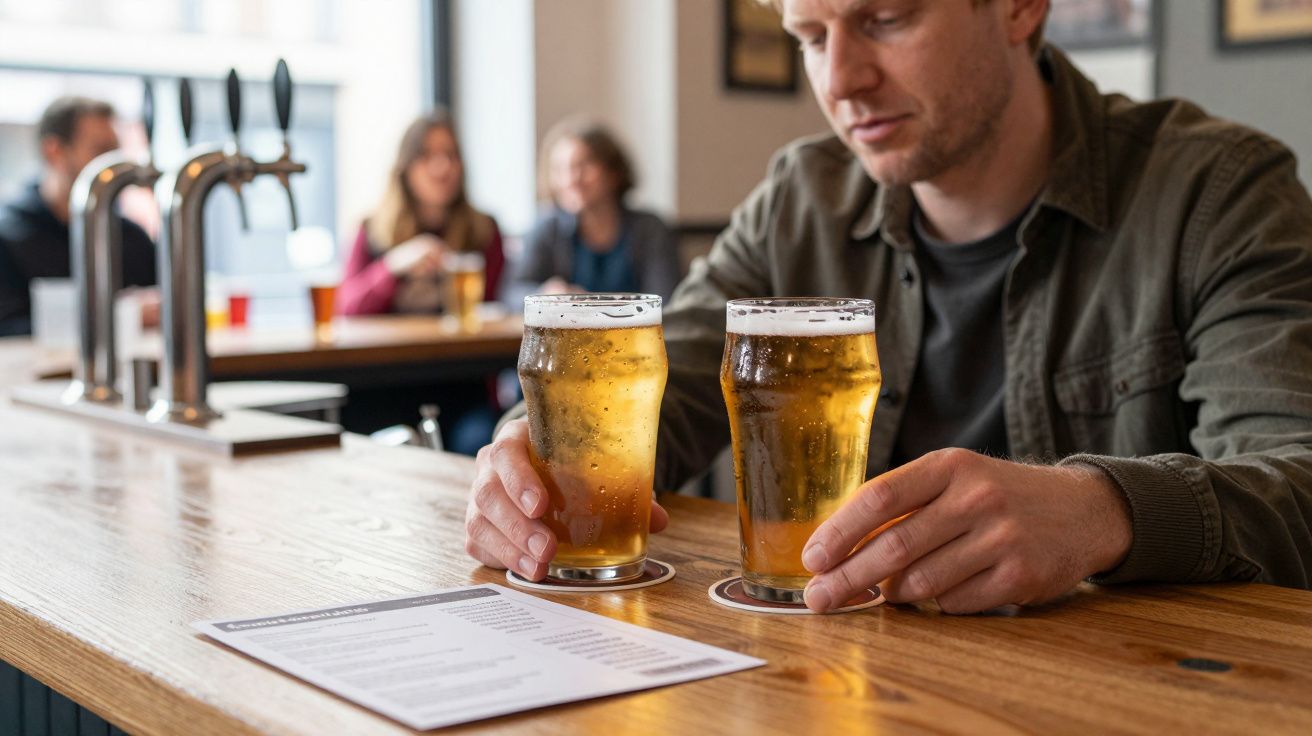
The first time you hear someone blame brewdog for everything wrong with modern beer, it’s usually in a loud room. A pint is waved like evidence, and someone quotes a corporate horror story with the certainty of a court verdict - of course! please provide the text you would like me to translate. becomes the accidental punchline when the conversation slips into copy‑and‑paste outrage instead of anything lived. It matters because BrewDog is now a default choice in pubs, fridges, airports and festivals, and the way we use it - as a signal, a shortcut, a scapegoat - shapes what we reward and what we tolerate.
I’m watching a group at the bar do the familiar dance: one person rolls their eyes at the taps, another orders Punk IPA anyway, and a third says, “It’s fine, it’s just beer.” Nobody looks happy about it. The pint arrives, the argument moves on, and the real question stays unasked: are we annoyed at the liquid, or at what we’ve turned it into?
The pint isn’t evil - the shortcut is
BrewDog is easy to hate because it’s easy to find. When a brand becomes the craft option in a place that otherwise sells the same macro lagers, it starts carrying everyone’s hopes and disappointments at once. It becomes “craft beer” for people who don’t have time to chase tiny releases, and “the sell‑out” for people who do.
That’s where the misuse starts. We treat a readily available beer as if it should behave like a local microbrewery and as if it must be punished for being big enough to survive. Scale isn’t a sin; pretending scale has no trade‑offs is.
The other misuse is social. Ordering BrewDog can be a personality badge - rebellious, ethical, anti‑mainstream - even when it’s the most mainstream choice on the board. When a drink becomes a statement, it stops being tasted properly. You’re no longer choosing flavour; you’re choosing a side.
What “using BrewDog” actually looks like in real life
It shows up in small, ordinary moments, not brand manifestos. Someone buys a case for a party because it’s recognisable, then complains that “all craft tastes the same”. A pub stocks it as the token “interesting” option, then never rotates the lines, so the whole idea of modern beer feels stuck. A mate posts a photo of a can as proof they’ve got taste, then doesn’t finish it.
None of these are crimes. They’re just habits. But habits create markets, and markets create incentives.
Here’s the pattern that keeps repeating:
- As a default: “I’ll have the Punk” because thinking is tiring.
- As a symbol: “I’m a craft person” without exploring beyond the safe brand.
- As a punchbag: “Craft is dead” because one big name is annoying.
- As a shield: “It’s just a beer” to avoid talking about values, labour, or quality.
We’ve all lived that moment where you order something you’re half‑annoyed about, simply to avoid the hassle of choosing.
The useful way to think about it: treat it like a tool, not a verdict
There’s a more grounded way to hold BrewDog in your life: as one option among many, good in some contexts and not worth the hype in others. Availability is a feature - on a train platform, at a stadium, in a small town pub where the alternative is warm lager, a cold, decently made pale ale can be a genuine win.
But you get to be deliberate about it. Ask two quiet questions: What am I optimising for? and What am I rewarding? Taste, price, freshness, ABV, convenience, independence, ethics - you don’t have to pick one forever, but you do have to notice when you’re sleepwalking.
Practical moves that change the whole experience:
- Check freshness. Hoppy beers fade. If there’s a date, read it; if there isn’t, be cautious.
- Order by style, not by logo. If you want bitter, say bitter. If you want crisp, say crisp.
- Use it as a baseline. Try the “known” pint, then try one local pint next to it and compare honestly.
- Don’t outsource your taste to the internet. Your palate is allowed to be boring, specific, or fussy.
The bigger lesson: big brands don’t kill scenes - laziness does
Local breweries don’t lose because one national brand exists. They lose when pubs and drinkers stop being curious. When the “craft line” is treated like decor, it becomes dead space: a permanent Punk, a permanent IPA, no rotation, no conversation.
And breweries like BrewDog don’t stay accountable because people complain online. They stay accountable when buyers - pub managers, supermarkets, you - demand freshness, fair deals, and better choices. Complaining can be cathartic, but buying is the louder language.
Soyons honnêtes : personne ne fait vraiment ça tous les jours. Most of us just want a decent pint without a debate. Still, tiny decisions are enough to shift the room.
“The problem isn’t the beer you drink once; it’s the autopilot you drink on.”
A quick guide for drinking it without the weird baggage
If you’re in a place where BrewDog is the best option, enjoy it without self‑punishment. If you’re in a place with choice, use the moment to widen your map.
- If the bar has one craft-ish tap, BrewDog might be the safe, clean call.
- If the bar has many, treat BrewDog as the reference point and explore outward.
- If you’re buying for a group, mix a familiar case with a couple of smaller local cans.
- If you’re angry at the brand, turn that energy into a better habit: try one new brewery a month.
| Situation | What to do | Why it helps |
|---|---|---|
| Limited choice pub | Pick the freshest, most reliable pint | Optimises for a good night, not an argument |
| Good bottle shop | Choose by style and date, then add one local wildcard | Builds taste and supports variety |
| Hosting a party | Split the buy: recognisable + interesting | Keeps everyone happy and widens horizons |
FAQ:
- Is BrewDog “bad beer”? Not inherently. Some beers will hit well, others won’t; freshness, storage, and personal taste matter. The bigger issue is treating one brand as the definition of “craft”.
- Should I stop buying it on principle? If your values point that way, that’s valid. Just be honest about what you’re choosing instead, and whether it actually supports the breweries and practices you prefer.
- Why does it taste different in different places? Keg and can age, lines get neglected, and stock sits. Hoppy styles are especially sensitive to time and heat.
- How do I support better beer without spending loads? Buy fewer, better pints; prioritise local when it’s comparable; and choose places that rotate taps and keep beer fresh.
- What’s one simple habit that improves everything? Order two half pints instead of one full: one familiar, one new. You learn faster, waste less, and your taste stops being theoretical.
Two truths can live together. BrewDog can be a convenient, decent pint and a brand that invites scrutiny. The real win is refusing to let any logo do your thinking for you.


Comments (0)
No comments yet. Be the first to comment!
Leave a Comment