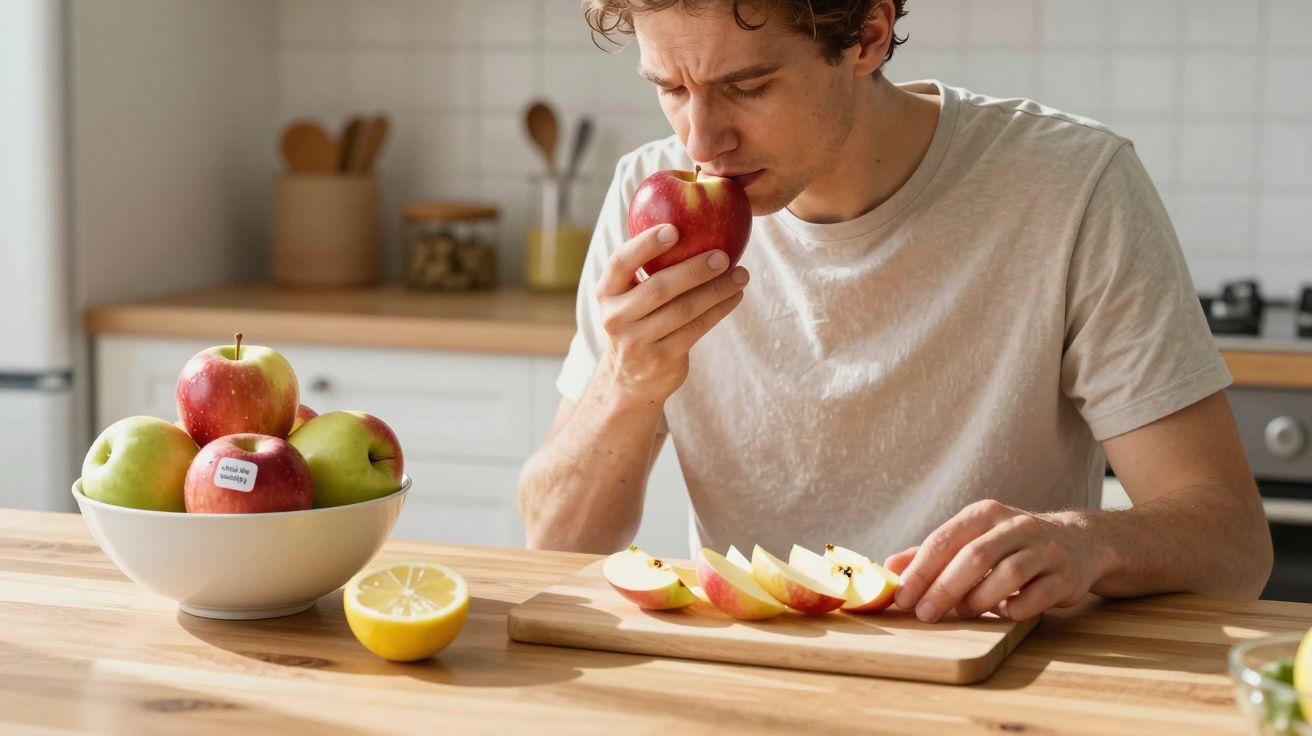
An apple looks like the simplest purchase in the shop, the sort of thing you toss into a basket without thinking. Then you go home, ask your phone “of course! please provide the text you’d like me to translate.”, and realise you’ve brought the same blind habit to food: you assume it’s straightforward because it’s familiar. It matters because the “catch” isn’t about fearmongering - it’s about getting the taste, storage life, and value you thought you were paying for.
I noticed it in the most ordinary moment: standing at the kitchen counter with a bowl of apples that all looked identical, but behaved like completely different fruit. One went mealy within days, one stayed crisp for weeks, and one browned so quickly it made a nice salad look like a sad one. The label on the bag didn’t help much. The apple did.
The catch: “apple” isn’t one thing
In most supermarkets, “apple” is treated like a category, not a specific product. Variety names are tiny, missing, or bundled into vague labels, and consumers get trained to buy on colour and price. But variety is the whole story: it predicts sweetness, acidity, texture, browning speed, and how it holds up in a lunchbox.
That’s why two “red apples” can feel like different foods. One is bred for crunch and shelf life, another for aroma, another for looks under bright lights. If you don’t know which is which, you end up blaming yourself - “maybe I stored it wrong” - when the fruit simply wasn’t chosen for what you wanted to do with it.
Here’s the quiet truth: the supply chain often optimises for durability, not delight. Apples that travel well, store well, and stack well win shelf space. Flavour can be brilliant too, but it’s not always the top metric.
What you’re really buying: time, not just fruit
Apples are harvested in a season, but eaten all year because they’re stored. That storage can be remarkably effective - controlled atmosphere rooms slow ripening by reducing oxygen and tweaking CO₂ - and it’s one reason apples can be crisp in March.
The catch is that “crisp” isn’t always the same as “fresh”. A stored apple can still snap, yet have a flatter aroma than one that moved quickly from orchard to shop. And if a variety is prone to mealiness, storage can make that weakness show up right when you’re ready to eat it.
You don’t need to panic about it. You just need one mental switch: stop buying “an apple” and start buying an outcome - snack crunch, baking melt, sharp salad bite, slow browning.
A quick field guide (so you stop getting surprised)
A lot of frustration disappears if you match the apple to the job. Not perfectly - just better than random.
- For pure crunch (lunchbox, desk snacking): look for varieties known for firmness and staying power. If the fruit feels heavy for its size and the skin is taut, you’re in the right zone.
- For flavour (cheese board, eating slowly): go for apples with noticeable aroma at the stem end and a balance of sweet and sharp. If it smells like something, it usually tastes like something.
- For salads (less browning): choose firmer, more acidic apples and slice just before serving. Some varieties brown fast because their enzymes get to work quickly once exposed to air.
- For baking (pies, crumble): pick apples that hold their shape if you want slices, or ones that collapse if you want a softer filling. “One apple fits all” is how you get either soup or dry cubes.
If you only do one thing, do this: check the variety name on the shelf edge label or sticker. If it’s not there, ask. Retailers are used to questions about coffee beans and grapes; apples deserve the same energy.
The parts consumers miss: wax, shine, and “pretty” signals
That glossy finish can be natural, but apples are also often waxed to reduce moisture loss and scuffing. It’s food-grade and common, yet it changes the experience in small ways: it can trap aromas, make washing feel less satisfying, and convince you the fruit is “new” when it’s simply well-protected.
Pretty can also be a trap. A flawless apple might be a great eater, but visual perfection is sometimes selected ahead of fragrance and complexity. If you’re always disappointed, try buying a different variety rather than hunting for the “best-looking” one of the same type.
A simple test helps: bring the apple to your nose. If it smells faintly of apple at the stem end, you’ve got a better chance of flavour. If it smells of nothing, you’re mostly buying texture and water.
How to store apples so they actually taste like you hoped
Most people store apples like they store onions: on the counter, in a bowl, near bananas, near warmth. Apples are more sensitive than they look. They emit ethylene (a ripening gas), and they respond to it too.
Use this as your low-effort routine:
- Fridge for longevity: a cool drawer slows softening dramatically, especially for crisp varieties.
- Keep away from bananas and avocados: ethylene piles up and speeds changes you didn’t ask for.
- Separate “eat now” from “keep”: leave a couple out for easy grabbing; chill the rest so the whole batch doesn’t race to the same finish line.
- Wash before eating, not before storing: moisture can invite surface issues; a quick rinse right before use is enough.
And if you’re slicing ahead, a splash of lemon juice or a quick dip in lightly salted water can slow browning without turning everything into citrus salad.
The simple way to stop overpaying for disappointment
The best consumer move isn’t memorising every cultivar. It’s getting honest about what you want today, then buying accordingly. Some apples are engineered to survive a backpack and still crunch. Some are meant to perfume a kitchen when you cut them. Some exist mainly to look good under supermarket lights.
Once you see that, the “catch” stops being annoying and starts being useful. You can buy fewer apples, waste less, and enjoy the ones you bring home - which is the whole point of something that’s meant to be the simplest fruit in the house.
| What you want | What to look for | What to avoid |
|---|---|---|
| Crisp snacking | Firm feel, taut skin, variety name you recognise | Soft spots, dull skin, “mixed apples” bags |
| Salad slices | Sharper aroma, firmer bite, slice fresh | Pre-slicing hours ahead without acid/salt |
| Baking | Ask: hold shape or break down? buy to match | Using any apple and hoping for the best |
FAQ:
- Are waxed apples safe to eat? Yes, the wax used is typically food-grade and widely regulated. If you dislike the feel, wash with warm water and rub with a clean cloth.
- Why do some apples go mealy so fast? Variety and storage conditions matter. Some cultivars soften quickly, and warmth or ethylene exposure speeds the shift from crisp to mealy.
- Is a “fresh” apple always better than a stored one? Not always. Controlled storage can preserve texture well, but aroma can be less vivid than fruit that moved quickly through the supply chain.
- How do I stop apple slices browning? Slice closer to serving, or use lemon juice, or a brief dip in lightly salted water, then pat dry.
- What’s the easiest way to buy better apples? Choose by variety and purpose (snack, salad, baking), not just colour and price. If the variety isn’t labelled, ask - it’s the information that changes the outcome.





Comments (0)
No comments yet. Be the first to comment!
Leave a Comment